Showing posts with label Alan Moore. Show all posts

Tuesday, September 29, 2026

Debating The Watchmen!


What exactly is the controversy with DC Comics using The Watchmen as an element of a reborn-rebooted-revised-rehashed DC Universe. If you don't appreciate the "purity" of The Watchmen franchise being sullied by association with mere superheroes, then okay. Get mad, don't buy any of those issues and re-read the original story yet again and savor an excellent bit of storytelling. But why the outrage?


Many seem to suggest it's immoral for DC to use these characters as they desire. I'm not aware they need the permission of the creators to do with these characters as they desire, they own them, but they have been gracious in the past and asked both Moore and Gibbons to weigh in on any future plans. The characters have proven to be successful, so it's obvious why DC wants to market them, it's the nature of business. From what I can gather DC has lived up to their side of the bargain struck many decades ago with Moore and Gibbons. That the deal didn't work out exactly like Moore anticipated is not DC's fault. The flaw in Moore's reasoning is that The Watchmen proved to be more successful than anticipated. Shucks what a problem to have since Moore gets a cut of all sales.


Let me be clear. Comic book creators in the past have been royally screwed by comic book companies and famously so. Characters worth millions if not billions have been harvested and their creators have gotten little if any recompense for their dutiful and diligent effort. Companies screw people all the damn time, it's one of the more repulsive aspects to the celebrated capitalism everyone gets giddy about when the stock market tickers start buzzing. Winners and losers, part of the great game, and at least part of the target of the story told by Moore and Gibbons in their remarkable adventure.


But that said, Moore and Gibbons are not among those creators who have been screwed. They were lucky enough to come along when contracts were more fair if not ideal and they have reaped significant profit from their efforts, and Moore could've have gotten much more if he'd been more agreeable to what plans the publisher might've had. He's entitled to believe what he wants, but no one can say he's been screwed out of any money. And it's rich that folks suggest Moore of all creators is a victim of this kind of pilfering since he's made a sizeable portion of his post-Watchmen career scraping out the enormous bins of the public domain and using characters and situations originally developed by such giants as Verne, Rohmer, Baum, Stevenson, Dickens, Wells, Haggard, among countless others. I don't condemn him for these borrowings, I just find it rich that he is put up as a victim when he's a pilferer just like so many of us can be.


Now DC has incorporated The Watchmen into the broader DCU. So what? Why is everyone outraged? God, people get over it already. DC wants to sell comics and they've been rather poor at it in recent years despite making every effort to entice folks to drop five bucks for a slender slick and quickly consumed comic (could that be the problem). If they want to forestall their inevitable doom by using all the tools they have then so be it. There's nothing in the arrangement with Moore and Gibbons that suggests they cannot do it that I'm aware of.


So folks might think it's a bankrupt move creatively, but I cannot for the life of me get why folks think it's immoral. The Watchmen were hatched on the bones of characters from Charlton and elsewhere. Steve Ditko, Pete Morisi, Pat Boyette, Jim Aparo, and Joe Gill get no cut of the profits when characters clearly inspired by their stories featuring Captain Atom, Blue Beetle, Nightshade, Thunderbolt, and the Question. Gibbons and Moore cobbled "new" heroes on the heap of the classics and made a damn fine comic. Great! They cut a dandy deal with DC for a piece of the action. Fantastic! Where's the particular and distinctive immorality on DC's part here?

Help me to understand.

More Watchmen tomorrow. 

Rip Off

Monday, September 28, 2026

Reading The Watchmen!


There is no question that Watchmen by Alan Moore and Dave Gibbons is among the finest comic series of all time. The story was a blockbuster when it was first published forty years ago and has remained in print ever since. Moore and Gibbons created an alternate dark universe in which it was always 1985 and Richard Nixon was still president of the United States, victorious in Vietnam, but still in a grisly world over which loomed the threat of nuclear war. It was almost as if time had stopped. 

(Ozymandias, Silk Spectre, Dr. Manhattan, Nite Owl, Rorschach and The Comedian)

In this alternate universe there were superheroes. Superman, Batman and Wonder Woman were not to be seen, but instead this world had heroes such as Nite Owl, Rorschach, Ozymandias, Silk Spectre, The Comedian and the supremely powerful Dr. Manattan. There had been another generation of heroes in years past, but these five are the ones who we focus on in this story and it is these five who will decide the fate of the planet. But who are these heroes? 


It seems that at first Moore and Gibbons had been given the Charlton Action-Heroes which had been recently acquired by DC as a present for Dick Giordano who had once edited the heroes in the late 60's. But then DC smartly decided to keep the Charlton heroes aside for future exploitation and so Moore and Gibbons had to create new heroes using the Charlton heroes as templates. The first among these, and in many ways the most crucial was The Comedian, a hero based on The Peacemaker. People have long thought Peacemaker by Jim Boyette and Joe Gill to be an absurd hero, a hero who fights for peace. I don't share this opinion but nonetheless The Comedian is presented as a somewhat foul fighter for justice, a man who sees the joke behind the way the world works. He is closely allied with the U.S. government and one of only two superheroes who are allowed to work in the country since the passing of a law forbidding masked vigilantes. It is the Comedian's murder which triggers the story. 


The threat of nuclear destruction loomed large in the 1980's. I felt it myself as a young man as we fretted who might push the almighty button first, us or the Soviet Union. When the Soviet Union finally collapsed the threat seemed lifted though the weapons still exist. 


A symbol of nuclear power was Dr Manhattan, the other legal superhero. Manhattan was based on Captain Atom created by Joe Gill and Steve Ditko. Atom was caught in a nuclear explosion and reconstituted his demolished body which was infused with radioactive might. Dr. Manhattan was also victim of a nuclear accident and the was "gifted" with a wide range of atomic powers, not the least of which was a strange ability to live in all moments of his life simultaneously. Part of a deadly scheme which started with the murder of Comedian demanded that Dr. Manhattan be driven from Earth, thus setting in motion events which would result in nuclear holocaust. 


The hero who is looking into the murder of The Comedian is the enigmatic Rorschach. When everyone else is content that it was a simple crime, he searches for the story beneath the obvious. His mission is what drives the story and gives it a sense of coherence. 


Rorschach is based on Steve Ditko's The Question. (Mr. A is another more extreme version of the Ditko character and seems also a clear influence on Rorschach.) The Question was Ditko's mainstream creation which most vividly evoked his Objectivist attitudes. In Rorschach there are conspiracies everywhere and even in his unmasked identity the search for the dark secrets is evident. 


The hero most closely linked to Rorschach is Nite Owl, the second hero who bears that name. Both Nite Owl and Rorschach have been banned by law from being vigilantes. Rorschach continues as a criminal while Nite Owl retired. Nite Owl is based on Blue Beetle, most vividly Steve Ditko's revised version of the character who is very much dependent on technology to pursue his methods of crime prevention. 


There are two Nite Owls in this saga, one the ally of Rorschach, the other a retired hero who runs a garage and who famously wrote a tell-all book which uncovered some of the darker aspects of the heroes who preceded the Watchmen. This first Nite Owl is based on the classic Blue Beetle from the Golden Age. 


Silk Spectre is the singular female hero in this bunch, and the youngest of the lot. She's a second-generation hero, following in the footsteps of her mother who groomed her to replace her. She is the paramour of Dr. Manhattan as the story opens and together they form a key chapter of the story, but her relationship with the second Nite Owl is really at the center of the Watchmen saga. Silk Spectre is based on Nightshade, another creation of Steve Ditko who debuted in the pages of Captain Atom. 


The final member of the Watchmen is Ozymandias, the smartest man on the planet. He is based on  Thunderbolt created by Pete Morisi. Ozymandias is a man who started as a hero but finds that fighting crime is a limited effort and so focuses on his many business interests and philanthropy. He has a base in the Antarctic which plays a key role in the story as it unfolds. 


Of the five key Watchmen characters three were created or co-created by Steve Ditko. His fingerprints are all over his story. It's a grim look at a scary time in human history when we all thought doom was just around the corner. 


I've intentionally been vague about key details of the story as not to spoil the story for anyone who might not have yet enjoyed it. It took me some years to realize its greatness as I was away from DC when it first rolled out. But there's no denying it's a classic and deserves a close reading by all comic book fans, especially those who love the Charlton heroes as I do. The story itself takes place mostly during the month of October and the climax is on November 2nd, the birthday of Steve Ditko. Whether that's intentional or a fluke it's still remarkable. Personally given Moore's attention to detail I doubt it's a coincidence. 

The story has been reprinted many times now and can be found in both expensive tomes and cheap versions. I own it three times. More on the Watchmen tomorrow. 

Rip Off

Friday, December 26, 2025

The Spirit Archives Volume Twenty-Seven!


Following on after DC's long run of The Spirit archive editions, Dark Horse Books in conjunction with longtime Kitchen Sink owner Denis Kitchen put out a twenty-seventh volume in the style of the DC books which gathered together the nine issues of The Spirit - The New Adventures. After many years of trying to talk Eisner into allowing other creators to play with The Spirit's universe, he at last convinced him of the idea in 1998. Some of the best comic men of the time took a dip in those Central City waters. 


The debut issue of The Spirit - The New Adventures features three tales by the super-star team of Alan Moore and Dave Gibbons, who also produced the cover. "The Most Important Meal" features Dr. Cobra who tells his origin story. "Force of Arms" offers up a possible clue to the identity of The Octopus. And the final story "Gossip and Gertrude Granch" tells us what really happened to Dr. Cobra's muscle-bound assistant. These stories all are connected in strange ways with that subtle Moore magic. 


The second issue offers up a cover by Will Eisner Mark Shultz. Under it is "The Return of Mink Stole" by Neil Gaiman and artist Eddie Campbell and combines a Spirit story with one torn from the realm of Quentin Tarrantino which propels a timid writer into a shady story of theft and more. "Sunday in the Part with St. George" by Jim Vance and artist Dan Burr has The Spirit race to the aid of a woman dangling from a flagpole where he meets an old enemy. "The Sphinx the Jinx in the Game of Life" by John Wagner and artist Carlos Ezquerra features a hapless chap just released from jail but doomed by fate to return. 


The third issue features a striking cover by Brian Bolland. The first story "Last Night I Dreamed of Dr. Cobra" by writer Alan Moore and artist Daniel Torres is a strange affair set in a distant future in which Central City is the site of an archeological endeavor and in which strange discoveries are made. "Ellen's Stalker" by Mark Kneece and artist Bo Hampton features Ellen Dolan when she is at first saved then pursued by a man who imitates the look of The Spirit. 


The fourth issue sports another new cover by Will Eisner, this time with the assistance of William Stout. "The Samovar of Shooshnipoor" was written by Kurt Busiek and drawn by his partner on Astro City Brent Anderson. It features Sand Saref in a tale in which she tries yet again to manipulate The Spirit in a bid to gain riches. This issue also has a pin-up by Moebius of The Spirit looking a lot like Humphrey Bogart. "The Weapon by Michael Allred, Matt Brundage and Michael Avon Oeming has The Spirit fighting Nazis and their robot allies on the docks of Central City. "Dr. Broca Von Bitelman" by Mark Schultz and artist David Lloyd features Satin and a mad doctor and his deadly "Super-Beetles". 


The fifth issue features a cover by Paul Chadwick and John Nyberg and is a key scene from the issue-length story titled "Cursed Beauty" by the same team. This one deals with a gorgeous woman who leaves the scene of a murder naked save for a barely concealing overcoat. There are lots of twists and turns in this story which also showcases Ebony White in a key role. 


The sixth issue features a gritty cover by Tim Bradstreet. The first story titled "Swami Vashtibubu" was written by John Ostrander and drawn by Tom Mandrake, and has The Spirit go around in drag to knab a gang of fraudsters led by a murderous couple. "Baby Eichbergh" by Scott Hampton on both script (with assistance by Mark Kneece) and art tells of a terrible kidnapping which features a strange quartet of good Samaritans. 


The seventh issue features a cover by Peter Poplaski. Under it is a story titled "Golf Anyone?" in which Commissioner Dolan cajoles The Spirit onto the links for a game to relax him, but of course that only ends in the duo finding more crimes to solve. A long-missing cast member shows up unexpectedly. "The Pacifist" was written by Eddie Campbell and Marcus Moore and drawn by Campbell and Pete Mullins and tells the tale of a bullet with ambitions beyond that for which it created. "The Ghost of Tiger Traps" written by Jay Stephens and drawn by Paul Pope features a trio of boys including Sammy and P.S. Smith as they try to get to the bottom of a notorious gangster who seems to rise from his grave. 


In the final issue we get a cover by Mark Nelson. The story "Sweetheart" was written by Joe R. Lansdale and drawn by John Lucas. This issue-long adventure features a naked woman who refuses to stay dead and in the morgue despite repeated attempts. It's a ghoulish ending to a strange series which seemed to want to update The Spirit for a modern audience. 


In a later edition of this same volume put out by Dark Horse a story originally intended for the series by Gary Chaloner was added. In the meantime, Chaloner had adapted it in his John Law edition reversing the order of things with the epic Sand Saref tale from so long ago.  


There are lots of very good stories in this volume and I recommend it. But if you're looking for the same jolt you got from those classic Eisner tales, beware as the creators here go off the reservation as they should have done when given the okay. Eisner only limited them in two ways -- The Spirit could not be married nor could he be killed. As we've learned killing The Spirit is virtually impossible. It's been fantastic this past year reading these classic tales. I'll have wee bit more to say on this year-long odyssey later. 

Rip Off

Monday, April 1, 2024

The Killing Joke!


Want to hear something funny? I've never read The Killing Joke by Alan Moore and Brian Bolland. Or perhaps it's more accurate to say that I'd never read it until just a few weeks ago when I was prepping this post. I have been a monster comic book fan my whole life. But somehow when The Killing Joke hit the bookshelves in 1988 my focus was elsewhere, on my family and beginning a new career. I was a devoted Marvel Comics fan at the time, limiting my focus to help save money for needed things for a wife and two young daughters. So, the changes at DC Comics largely passed me by. 


I ignored The Watchmen. I missed out on John Byrne's fresh take on Superman, I passed on reading Frank Miller's The Dark Knight, and I ignored the praise that The Killing Joke was getting. Later when I turned my attention back to DC, I just never got around to reading this classic. I knew of the consequences such as Barbara Gordon's baleful injuries, but I was never tempted to read the actual story itself. Maybe it was a bit of reverse snobbishness since the story seemed to garner such universal praise. Truth told I was late in the game to the whole Alan Moore phenomenon and his boorish attitudes about it later in life have not warmed me to him. I'm trying to fix that now. 


So, now that I've at long last read it. What's my opinion? It's a pretty fucking (pardon my curse but it felt appropriate) fantastic bit of storytelling that grabs a reader by the neck and lets the go only when that final chuckle has receded into the night. Brian Bolland's artwork (and coloring) is magnificent. Moore's script is clever and taught. The story cannot of course have the same effect on me that it did on readers decades ago because I to some little extent know some of the goriest details from other sources. That's not the fault of the creators. It's not their fault I dallied for over thirty-five years to give this infamous bit of comic book storytelling a go. But I can say the stuff holds up and that it doesn't age a smidge. Bolland creates a noir world which is simultaneously decades old and timelessly fresh. 


Having at long last read The Killing Joke, I turned my attention to the animated adaptation and doing that helped make better sense of the original. It does reproduce the story, but the adaptation falls short of its emotional impact for a number of reasons. The animation cannot really reproduce Bolland's remarkable artwork, a limitation of the form. But most importantly the creators felt the need to add a whole other story to the beginning which featured Batgirl in action. I understood the perceived need to establish her for folks not coming from the comics, but it seemed somewhat random. It undermined the main story and after she's shot there is actually very little about Barbara Gordon in the remainder of the film. And sadly, that's possibly the most tragic part of her role in this story. 


The creators of the cartoon were fooled into thinking the story was about her and what happens to her. It's not. She's sadly just collateral damage like so many of the tragic victims are in the eternal conflict between Batman and the Joker. That was Alan Moore's secret, he took a permanent character and treated her like an impermanent one. It rattled the comfort zone from which we read our little stories and suggested that all things might just be possible. 


So, in the final analysis, I heartily recommend The Killing Joke to any comics fan. What is that? You've already read it, a long time ago in fact. Well, as it turns out the joke is on me. 

Happy April Fool's Day to all. More Joker later today. 

Rip Off

Monday, November 27, 2023

The Mammoth Book Of Best Crime Comics!


The Mammoth Book of Best Crime Comics is a real feast. All in glorious black and white, this anthology brings together crime stories from across the globe and from many decades. I will admit that some of the experimental stories, such as two by Alan Moore that form a beginning and ending for this collection elude me somewhat, but the bulk of the material is totally accessible. The beauty of a collection like this is if you don't much like the story you're reading, you are confident that the next one will strike your fancy. 


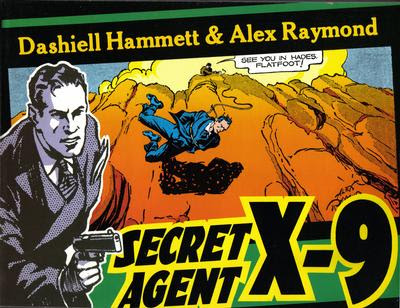
Some of the highlights of the collection for me are Jack Cole's "Murder, Morphine and Me!", Will Eisner's "The Spirit: The Portier Fortune", Alex Toth's "The Crushed Gardenia", and Johnny Craig's "The Sewer". There is a large section of the book dedicated to Secret Agent X-9 by Dashiell Hammett and Alex Raymond, and Ms.Tree story "Maternity Leave" by Max Allen Collins and Terry Beatty gets a large hunk as well. There are two stories featuring art by Bernie Krigstein, one dandy tale titled "Lily White Joe" and a later totally strange yarn form the 87th Precinct titled "Blind Man's Bluff". The notes indicated the sheer oddball nature of this yarn drove Krigstein away from comics for good.


Likewise, artist Ed Robbins left the field when his comic strip with Mickey Spillane "From the Files of Mike Hammer" was censored and ultimately cancelled for the bondage scene above. Sanchez Abuli and Jordi Bernet turn in a classic with a Torpedo 36 story called "The Switch". Neil Gaiman and Warren Piere create one of the most depraved comics I've ever read with "The Court". El Borbah created by Charles Burns is a ton of fun, weird and offbeat fun in the story "Love in Vein". Our old friends Joe Simon and Jack Kirby check in with "The Money-Making Machine Swindlers" and Bill Everett turns in a great artistic effort on "The Button". And I've always been a fan of Paul Grist's Kane series represented here with the story "Rat in the House". 

Below are some of the covers for the comics and such in which many of these stories originally appeared. As you can see, it's an eclectic gathering of artistic styles as are the stories themselves. At a cool twenty bucks (when I bought it anyway) this collection is an entertaining bargain.


Rip Off