Showing posts with label Bob Powell. Show all posts

Monday, January 19, 2026

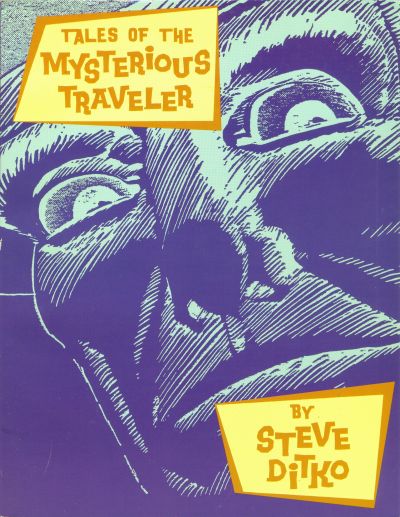
Ditko Cover Classics - Tales Of The Mysterious Traveler!


"This is The Mysterious Traveler, inviting you to join me on another journey into the strange and terrifying. I hope you will enjoy the trip, that it will thrill you a little and chill you a little. So, settle back, get a good grp on your nerves and be comfortable -- if you can!"

So opens The Mysterious Traveler, a radio program created by Robert Arthur and David Kogan which from the 1943 to 1952 inspired not one but two distinctly different comic books. The second became a platform for the great Steve Ditko to deliver his fast-developing talents as a maker of spooky tales. But let's begin with the first, a one-shot. 


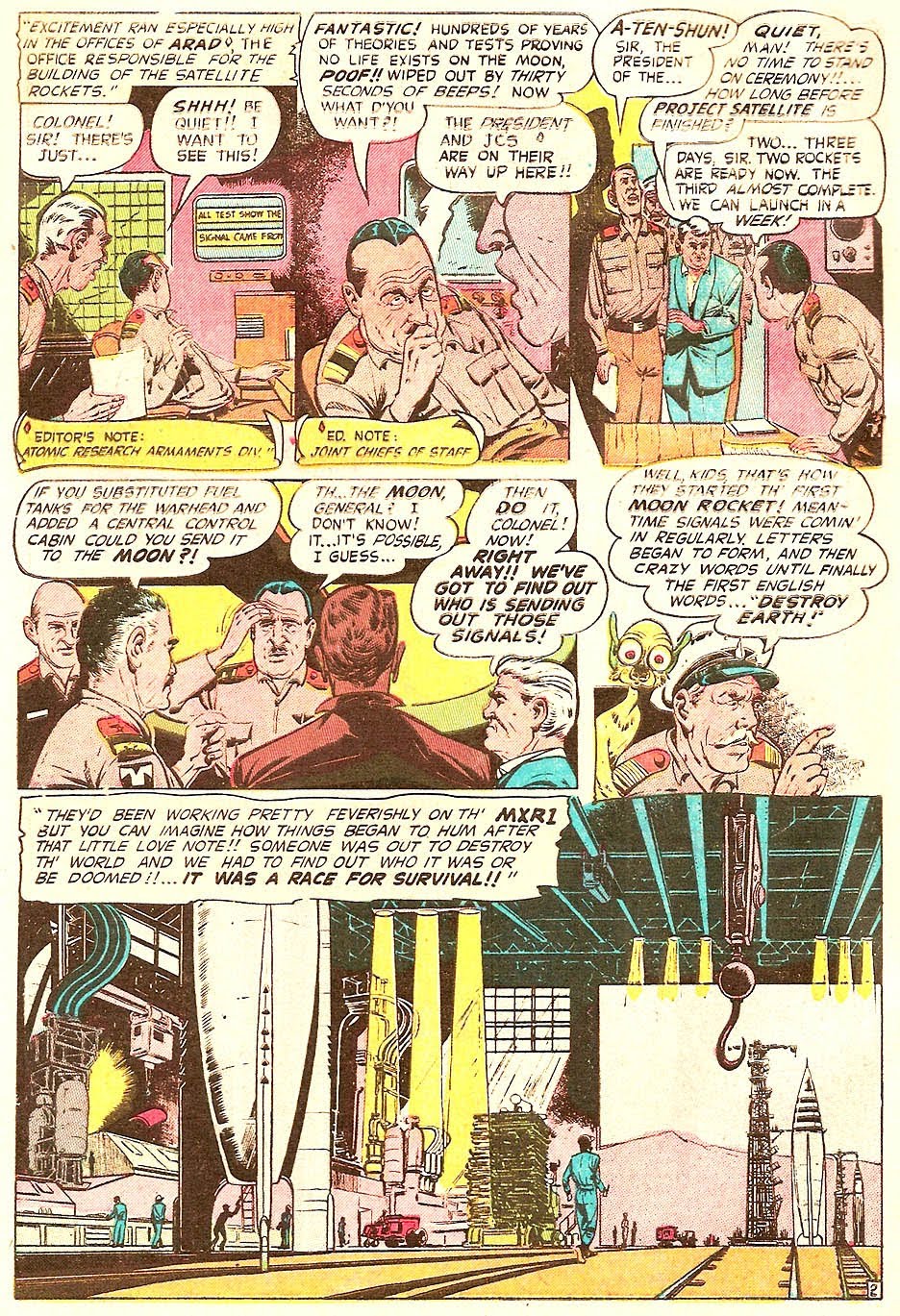
The Mysterious Traveler number one from Trans-World Publications debuted in 1948, and was produced by the ubiquitous Bob Powell and his at-the-ready studio. The comic delivers several short stories in the tradition of the radio show though no direct connection can be demonstrated. To get a better look follow this link


The second comic book featuring The Mysterious Traveler came from Charlton Comics, and it ran for a lucky thirteen issues between 1956 and 1959. This version featured tales written most likely by Joe Gill and drawn by many of the stalwarts at Charlton such as Dick Giordano, Rocke Mastroserio, Bill Molno and others including Ditko who drew his first story for the comic in the second issue and his first cover (one of his best) with the third. The title was revived as a reprint only book for two more issues in 1985 in the last throes of Charlton as the company disappeared for good. Later still in 1990 Eclipse Comics put out reprint volume featuring the Ditko stories titled Tales of The Mysterious Traveler

More on The Mysterious Traveler tomorrow. 

Rip Off

Saturday, October 4, 2025

Mr. Mystic!


The Spirit Section was never just the adventures of the Central City protector. Also included in the package were the misadventures of Lady Luck and our focus today -- Mr. Mystic. As far as I can find out, only the first five Mr. Mystic adventures have ever been collected and that was way back in 80's when a slender comic from Eclipse slithered into the comic shops of the time. 


The highly underrated Bob Powell was the artist behind this Will Eisner creation. Mr. Mystic was just one of a cavalcade of magicians who wandered across the comics landscape. Mandrake the Magician by Lee Falk had become a success in the newspaper comics years before and being a magician was an easy way to explain "super-powers". The writer Eisner and the artist Powell use the name "W. Morgan Thomas" on his work for Mr. Mystic. 


"The Origin of Mr. Mystic" June 2, 1940

This story is a crushed version of the movie Lost Horizon...sort of. Americans are fleeing invading armies and a diplomat we only know as "Ken" insists that a Professor Padewski take his seat aboard the overcrowded plane. Ken then finds a plane, but crashes. He is scooped up by a sect of monks called "The Council of the Seven Lamas" and almost immediately given vast magical powers by the act of putting a brand on his forehead. The Lamas disappear and Ken now gifted with almost limitless power to create and transform objects hears a voice which tells him he will be "Mr. Mystic". A tuxedo, cape, and turban appear and he's on his way to save Padewski yet again. 

"Karoly Gore, the Dictator of Europe" June 9, 1940

This yarn sees our hero go to capture a notorious dictator for a million dollar reward he will use to ease the suffering caused by the dictator. Gore himself proves to be a weak man, easily defeated, but the woman named Elena is much more dangerous and has powers of hypnosis she uses to opposed Mr. Mystic. In the end of course Mr. Mystic wins the day. 

"The Slave Traders" June 16, 1940

Mr. Mystic finds a woman near death in the desert. Just before she dies, she tells him of slave traders who had captured her. Mystic marks her grave with a tree which shall never die then off he goes to stop the slave traders. He stops the trade and saves a woman named Wooding, using a flying carpet in the process. 

"The Zombies of Dr. Gung" 23, 1940

Elena returns from seeming death to battle Mr. Mystic again. This time the action is in Hong Kong where a Dr. Gung is busy creating "zombies" by using rays to rob men of their ability to reason. Mr. Mystic was given a necklace by the Lamas which gave him supreme power and Elena spots it and covets it immediately when he follows her trail to Gung's place. 


"The Burch Gang Smugglers" June 30, 1940

Mr. Mystic comes to America for the first time in the series, and just in time to save two young lovers named Bill and Shamrock from the clutches of smugglers. Mr. Mystic walks on water to save these two and to stop the gang. And in classic pulp hero fashion, he disappears before he can be thanked by the couple. 


Mr. Mystic looks from this small sampling to be a rather typical magician-superhero type of the time. He's very similar in many ways to Yarko the Great created by Eisner and others for the Iger Studio when Eisner was a part of that operation. It's surprising that a Mr. Mystic collection of greater breadth hasn't been done in all these decades. 

Rip Off

Friday, December 27, 2024

The Sound Of Thun'da!


Thun'da King of the Congo #1 has the distinction of apparently being the only full-length comic book illustrated by Frank Frazetta. He is credited with creating Thun'da though the scripts are by Gardner Fox. Frazetta left the comic after a single issue because editorial demanded he move Thun'da from a savage "Lost World" filled with prehistoric beasts to the relatively mundane jungle of the then modern Congo. Instead of a Burroughsian fantasy hero in the mold of David Innes, they wanted yet another Tarzan knock-off. The debut cover is a classic. 


They got what they wanted in subsequent five issues illustrated by reliable comics journeyman Bob Powell. 


Thun'da King of the Congo even went on to become a movie serial starring Buster Crabbe. But there was this one issue by Frazetta. 


The first story by writer Gardner Fox and artist Frazetta is titled "King of the Lost Lands", and it tells of how during WWII Roger Drum an aviator crashes his supply plane inside the mysterious regions of Africa. 

(Thun'da Model Sheet)

He finds a "lost world" filled with beast men and dinosaurs. He battles furiously to survive but eventually goes native and is soon dubbed "Thun'da" by the Valley People and the beautiful Phra. Presumably the name is a result of the boom his gun made as he fired his last bullets to kill a giant snake. This is a rugged story told at a rapid clip and features some fantastic Frazetta imagery. To read "King of the Lost Lands" go here

Here are the three remaining Frazetta Thun'da stories with links so you can read the entire thing. 


The second story is titled "The Monsters from the Mists!" and this yarn finds Thun'da fighting monkeymen who have tamed shaggy mammoths. Protecting the lovely Phra Thun'da battles against the apemen, killing thier leader and escaping their lair to lead a counterattack using fire against the enemy by uniting the tribes of the valley. To enjoy "The Monsters from the Mists" check out this link


The third story titled "When the Earth Shook" pits Thun'da and Phra alongside a sabretooth tiger named Sabre. Thun'da killed its parent and raises the beast as his companion. An earthquake opens the lost land up and a white hunter and his black bearers find their way into the valley. They take Thun'da captive and threaten him to help them find gold. But he escapes, raises the natives and fights back. The outsiders try to take their gold, but another earthquake buries them and closes off the lost world.  To read "When the Earth Shook" visit this link


The fourth and final story "Gods of the Jungle" finds Thun'da operating in the Congo as yet another jungle hero. He battles against natives and white hunters, particularly two Soviet spies who use native superstition to build up a false monster-god. Thun'da reveals the deception and puts down this threat of the agitated and decived natives and the spies are turned over to the authorities. The last scene shows Thun'da, Phra and Sabre heading out into the veldt. To read "Gods of the Jungle" go here

(Dave Stevens Bettie Page cover evokes the Frazetta classic.)


(Austrian Reprint 1983)

(Dark Horse Reprint 2010)

(Fantagraphics Books Reprint 1987)

Outstanding stuff. It's a pity Frazetta couldn't do more and it's a pity his vision was snuffed out. I've read some of the Powell Thun'da stories in an AC reprint and they are fine but predictable and bland. Frazetta's Thun'da is dynamic and grim, if not always logical. Like the best of ERB, the Thun'da stories by Frazetta and Fox don't always makes complete sense, but they always carry you away.


In 2012 Dynamite Comics got their mitts on Thun'da and attempted to retell the story. We meet Thun'd all over again, this time he's a conflicted man with an unsavory past and he's plunked down into a world brimming with dinosaurs. The covers are by Jae Lee and they are handsome enough, with issue three having some real power. The series ran for five issues and was collected along with a complete reprint of the Frazetta classic. 


These subsequent Thun'da tales lack the potency of the Frazetta classics, but we already knew that. I imagine there might be Thun'da stories out there I'm ignorant of. Please let me know. 

More Frazetta tomorrow. 

Rip Off

Thursday, June 29, 2023

Flying Saucer Comics!

Flying saucers have waxed and waned in popular culture for decades now. In the early 50's the concept was just beginning to take its shape. Comics were quick to take advantage of the fad and gave us several comics referencing the mysterious flying objects. Vic Torry and his Flying Saucer appeared in 1950 and featured the work of artist Bob Powell underneath an attention-getting photo cover. To read this strange UFO artifact check out this link to Atomic Kommie Comics Reading Room. 

Another comic book from the era is Avon's Flying Saucers, another one-shot. Underneath a fascinating Gene Fawcette cover you'll find some early artwork by the great Wally Wood. The mini-epic speculates about just how long aliens have been here on this planet, with echoes of the Shaver Mystery ringing in the background. To read this amazing comic visit this link to Atomic Kommie Comics Reading Room. (Thanks amigo for putting these classic yarns on the internet.)
 Rip Off

Friday, March 31, 2023

The Space Ace!


I adore this 1951 classic comic by Bob Powell. When I first came in contact with Major Inapak The Space Ace in 1971, I was thrilled to actually have in my boyish hands a comic of such vintage. I well remember thinking that twenty years was a impossibly immense time and that such gems must be valuable. I treasured it, but would learn some years later that apparently a great cache of these were discovered around the time I got mine and were flooded onto the market.

The comic ain't worth much as a collectible, save in the hearts of fanboys like me. I'm happy to make this comic book a part of my blog. If you've read it before online enjoy it again, if you haven't ready yourself for a surprisingly well-crafted treat. For a comic with such small ambitions as selling some chocolate drink this is a gem.


NOTE: This is a Dojo Revised Classic Post. 

Rip Off

Thursday, November 25, 2021

The Blind Man Sees Red!


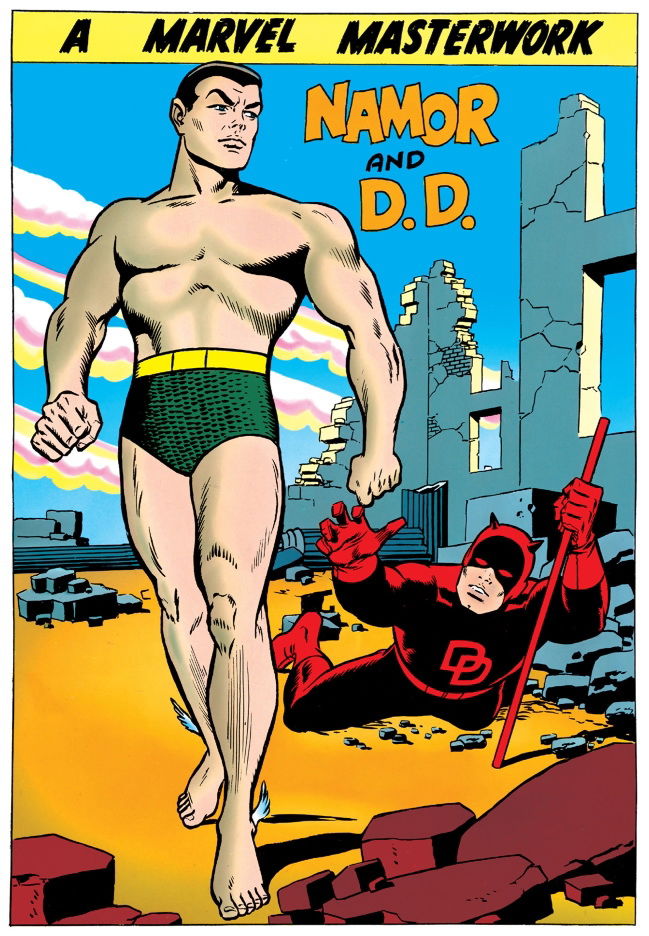
As important as fine talents the likes of Gene Colan and Frank Miller have been to the development of the Daredevil comic book, it's easily arguable to me that the single most important artist in the history of the was Wally Wood. What Wood did was simply transform Daredevil from a musty looking superhero who might've dropped in out of the Golden Age into a sleek modern hero literally suited for the Silver Age. He did it with a single color -- red.


From his inception the design of Daredevil had played off his name by adorning his cowl with little horns. What Wally Wood did was to take that notion and give the character named "Devil" a deep rich color which evoked his name in all its glory. Soon after taking the helm Wood started diddling with the look and along with Stan Lee even made sure the hero got some high profile exposure in the Fantastic Four of all places and by fighting one of the greatest of all Marvel battles ever against the indomitable Prince Namor, the Sub-Mariner. "The Man Without Fear" earned his nickname when he put it all on the line against the Sea King and there was no going back.


Despite small-ball but visually spectacular villains like the Stilt-Man, the comic was secure because watching DD in battle was exciting in itself.


Not all the stories made sense, but getting there was nearly all the fun. Daredevil was establishing himself as a hero who took on all comers and looked good doing it.


Wally Wood's tenure was brief though and ended when Bob Powell was brought aboard to finish Wood's layouts in the terrific two-parter featuring the debut of the villains who would be called the Ani-Men. These guys are all Wood, who wrote the first half of the two-part adventure. With that Wood left the book and a fellow named John Romita took the helm, no slouch himself.


Wally Wood stepped aboard the Daredevil comic book one more time, inking Frank Miller in a story from his epic run. It was a hearty reminder of the early days when Wally Wood had saved the comic from the dustbin of history.

daredevil # 7 pin - up / 1965 - acetate color, in red raven's ...

It was then that Daredevil was established as the comic without fear.

Note: This post originally appeared at Rip Jagger's Other Dojo. I will be transferring some of those posts over here as the month goes on. 

Rip Off