Showing posts with label Michael T.Gilbert. Show all posts

Monday, June 23, 2025

The Complete Wraith!


The Wraith is Michael T. Gilbert's 70's reinvention of the classic Eisner The Spirit. According to Gilbert he was casting about for work in those halcyon days when comics seemed to about to expel the last gasp just any minute and found work with Mike Friedrich's little Star*Reach outfit. Specifically in a short-lived comic dubbed Quack which hoped to reap some of the glamour stirred up by the out-of-nowhere ascendancy of Marvel's Howard the Duck. Suddenly the superhero was displaced, and funny animals were on...if only briefly. 


Looking for inspiration, Gilbert was a fan of The Spirit and thought a funny animal version might just work. He produced seven stories featuring The Wraith, one each for the six issues of Quack and another for his later comic Strange Brew published by Aardvark-Vanaheim. And as far as I know that's all of the Wraith there is.


The Wraith began as an homage to the classic Eisner hero and little else, saving a lady of the evening from her employers. Other stories have him battling mad scientists and even falling in love on an isolated island. The stories are in continuity, so despite their frolicsome nature what happens is remembered. That adds quite a bit to stories which by design are often quite slender, the whole perhaps greater than the sum of the parts. The one cover appearance for "The Reality Ray" really shows how offbeat and creative Gilbert was in trying to make the stories click.


The tome I read featured very detailed text pages by Gilbert about how The Wraith came to be and how his misadventures often reflected Gilbert's own personal life at the time. We also get a nifty explanation of some of the techniques Gilbert used. We are seeing an artist grow in real time with these stories and this background info helps to make sense of the style and thematic changes.


But Gilbert seemed all too ready to leave The Wraith, suggesting he'd done all he could do and it was time for other projects (such as his most famous creation Mr.Monster --more tomorrow on that). I doubt he thinks that still today and I wonder if and when we'll ever see another Wraith tale. I'd be interested.

Rip Off

Tuesday, July 20, 2021

Dojo Classics - Mr. Monster - His Books Of Forbidden Knowledge Volume One!


The early 80's saw a burst of creativity when a generation of young and eager creators (and some not so young but still eager) had the chance to showcase their talents with the development of a new marketplace for comic books. The Independent market in new christened "comic shops" saw a batch of new publishers keen to find purchase there and hungry for talent to create product to make that possible, and on terms the talent couldn't resist. Lots of nifty new superhero types hit the stands such as Megaton Man, Flaming Carrot and Nexus. Alongside those would appear Michael T. Gilbert's Mr. Monster.


Mr. Monster began as a project for Pacific Comics, the little company that spearheaded the Indy market with titles such as Captain Victory by Jack Kirby and Starslayer by Mike Grell.


They were looking for material for Vanguard Illustrated, an anthology comic with a science fiction and fantasy twist that catered to up and coming talent. The first chapter of Mr. Monster debuted there, part of a three-part story about a "Reluctant Werewolf". But before the story could be continued Vanguard Illustrated was cancelled and Pacific Comics was defunct, among the first wave of victims in the new marketplace.


Gilbert's Mr. Monster has one of the more fascinating origins in comics lore. Mr. Monster was not so much"created" but "recreated" by Gilbert using an obscure Golden Age character who had only a few appearances, and only one in the distinctive costume above as drawn by Fred Kelly. This particular comic fell into the mitts of a young Michael Gilbert and he wondered what such a hero might really be all about. He twisted and reconfigured the character substantially and he became a burly monster hunter with a surly attitude toward his fellow men.


The complete story of the "reluctant werewolf" was showcased in Mr. Monster #1 from Eclipse Comics and the character was well and truly launched. A delightful Dave Stevens cover adorned the second issue,  which featured a story about an odd and innocent little fellow named "Hemo-Boy".


The third issue under a Stephen Bissette cover had Mr. Monster battle garbage made sentient and so even more dangerous to one and all than normal. This story was written by Alan Moore and drawn by Gilbert.


The fourth issue showcased a wonderful teaming as Gilbert used the talents of Jon Bonivert's unique art stylings to draw literally a distinction between two different universes in the story. It's a crafty and a well-crafted story for sure.


The first wave of Mr. Monster stories ends with an anthology of short stories in the fifth issue in which Mr. Monster fights a plague, a ghost and invaders from Mars. Wonderful fun all, and more evidence that no Mr. Monster story would ever be quite like the last one or the next one either. 


These first five issues were collected in Mr. Monster's Forbidden Book of Knowledge Volume One. Sadly no second volume came around to collect the next five Eclipse issues though collections of the latter days of Mr.Monster from Dark Horse do exist, though for a pretty penny these days. This is a hero desperately in need of a showcase, a chance to prove that wicked can be funny, very funny indeed. 

Rip Off

Monday, July 19, 2021

Dojo Classics - The Complete Wraith!


The Wraith is Michael T. Gilbert's 70's reinvention of the classic Eisner The Spirit. According to Gilbert he was casting about for work in those halcyon days when comics seemed to about to expel the last gasp just any minute and found work with Mike Friedrich's little Star*Reach outfit. Specifically in a short-lived comic dubbed Quack which hoped to reap some of the glamour stirred up by the out-of-nowhere ascendancy of Marvel's Howard the Duck. Suddenly the superhero was displaced and funny animals were on...if only briefly. 


Looking for inspiration, Gilbert was a fan of The Spirit and thought a funny animal version might just work. He produced seven stories featuring The Wraith, one each for the six issues of Quack and another for his later comic Strange Brew published by Aardvark-Vanaheim. And as far as I know that's all of the Wraith there is.


The Wraith begin as a slight homage to the classic Eisner hero and little else, saving a lady of the evening from her employers. Other stories have him battling mad scientists and even falling in love on an isolated island. The stories are in continuity, so despite their frolicsome nature what happens is remembered. That adds quite a bit to stories which by design are often quite slender, the whole perhaps greater than the sum of the parts. The one cover appearance for "The Reality Ray" really shows how offbeat and creative Gilbert was in trying to make the stories click.


The tome I read featured very detailed text pages by Gilbert about how The Wraith came to be and how his misadventures often reflected Gilbert's own personal life at the time. We also get a nifty explanation of some of the techniques Gilbert used. We are seeing an artist grow in real time with these stories and this background info helps to make sense of the style and thematic changes.


But Gilbert seemed all too ready to leave The Wraith, suggesting he'd done all he could do and it was time for other projects (such as his most famous creation Mr.Monster --more tomorrow on that). I doubt he thinks that still today and I wonder if and when we'll ever see another Wraith tale. I'd be interested.

Rip Off

Saturday, January 2, 2021

The Golden Age Of Comic Fandom!


In The Golden Age of Comics Fandom Bill Schelly offers up a surprisingly detailed account of how in the earliest days of the Silver Age of comics that certain fans were instrumental in initiating a club of sorts of like-minded individuals, what was dubbed a "fandom". The template was the fandom of science fiction which had formed through the mails in the 30's. It's not really a coincidence since Julie Schwartz who was key to igniting the comics fandom had been one of those important science fiction fans long before with his friend and fellow DC editor Mort Weisinger. Schwartz saw the enthusiasm of the fans who were eager to see their Golden Age heroes return from the mists of time. 


Actually those mists hadn't been around that long. The new Flash debuted in the pages of Showcase in 1956, a mere five years after the cancellation of the Golden Age Flash's comic. Five years feels like nothing compared to the decades now which have passed since the development of the comic book. But then it was a quarter of the time since the debut of Superman, so all things are relative I guess. Schwartz corresponded with fans like Jerry Bails and Roy Thomas and it's those communications which triggered the beginnings of fandom. It is Jerry Bails in particular that Schelly rightly gives much credit to for initiating many of the publications and events which marked an active fan group. 


Bails started Alter Ego and quickly joined by Thomas and that publication became the flagship of fandom in its earliest days. Schelly discusses important fans such as G.B. Love who was critical in keeping the fandom movement active with his publications such as Rocket Blast Comic Collector. We read of artists such as Ronn Foss, good enough to be a pro but never seeming to really want that, and Richard "Grass" Green who did and was good enough but somehow never caught that one break. It's talents like these which fired many of the amateur publications, since given that the professional ranks of comic book makers were stocked with guys returning to an industry which had only a few years ago been almost dead, there was little room for fresh blood. 


E. Nelson Bridwell hooked on at DC, Archie Goodwin made a go of it at Warren among other places and of course Roy Thomas became a big deal at Marvel. In the 70's many fans such as Rich Buckler, Frank Brunner, Sam Grainger, Dave Cockrum, Mike Vosburg, John Byrne, Bob Layton, Steve Gerber, Roger Stern, Marv Wolfman, Len Wein, Berni Wrightson, and many more landed filling spots left by veteran talents, some who left willingly and some who were unceremoniously shown the door. In the fan world two of the best artists Biljo White and Landon Chesney didn't break into the pros.  Mostly by choice, but clearly they were good enough. 


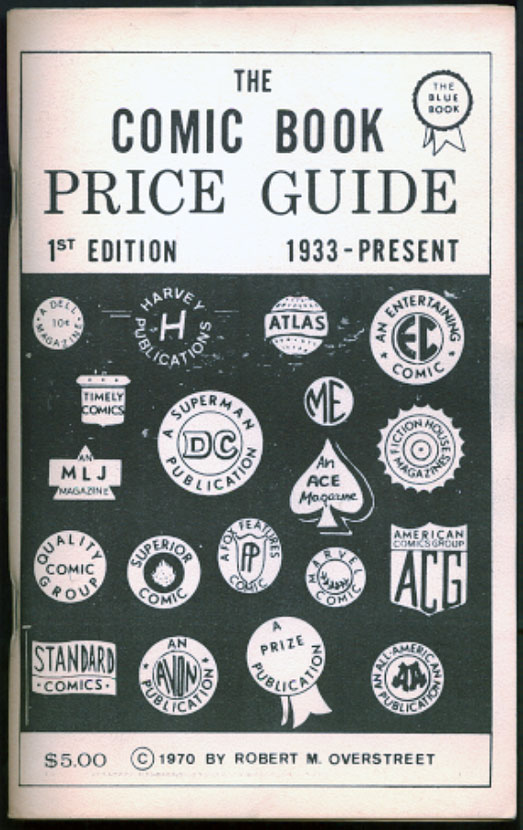
Most of the fandom was focused on superheroes and when the Batman TV show hit, it was a tsunami with the popularity of the form rocketing up and up and up. But some fans were hooked on vintage EC Comics and some others were intent on the business side of the comic book collecting. This gave rise to needs to regulate back issue prices and that made it possible for tools like Bob Overstreet's Price Guide to find a purchase in the landscape. 


Schelly spends a great deal of time talking about how the early conventions developed, first in Detroit and later in NYC and later still in San Diego. Of course we all know what became of that last one and that's really why this volume is about the "Golden Age" of fandom which Schelly puts between 1961 and 1972. Fandom did not wither and die by any means, but the early  attempts at communications such as fanzines were supplanted by professional efforts and the talent was sucked away by the pros. Also, many of the key members of that time moved on with lives that as they always do became complex and focused on other things than four-color funny books.

This is a hyper-detailed but still enjoyable read and I recommend it anyone interested in those olden golden days. 

Rip Off 


Wednesday, December 23, 2009

The Next Issue Project!


I don't buy much Image. But I made an exception a few years back when the debut issue of "The Next Issue Project" hit the stands. The idea is a clever one, put out a new "next issue" of a defunct Golden Age comic book. Get top-name creators to contribute and give the whole shebang a modern ironic twist. Sounds like fun.

The first issue was the next issue of Fantastic Comics, a Fox publication starring Samson and filled with backup features like Clip Carson, Sub Saunders, Captain Kidd, Stardust, and Space Smith. It was cleverly done, oversized as a Golden Age comic would be. Some of the pages were toned to imitate vintage pulp paper and the whole thing looked snazzy. The stories were uneven, with some offering fun spins on classic concepts and others being downright incomprehensible. The Stardust story by Mike Alred was pretty keen, as well as Tom Yeates spin on the Golden Knight.

The next issue just hit the stands, nearly two years later and it was the "next issue" of Silver Streak Comics starring Daredevil, The Claw, Captain Battle, and Silver Streak. This one was oversized too, but slimmer with fewer features, but I'll have to say they were more enjoyable. None of the stories was impossible to understand, and most were well crafted. The stories were frothy and light, almost too much so, but with talents like Alan Weiss, Erik Larsen, Paul Grist, and Michael T. Gilbert, the contents were professional. My favorite story featured The Claw of today, a corporate figure lost in the requirements of the modern world and the reality of older age.

It takes a long time for these to come out it seems. And that's good, as I don't know that I'd get them much more often than once or twice a year at most.

Rip Off