Wednesday, July 4, 2012

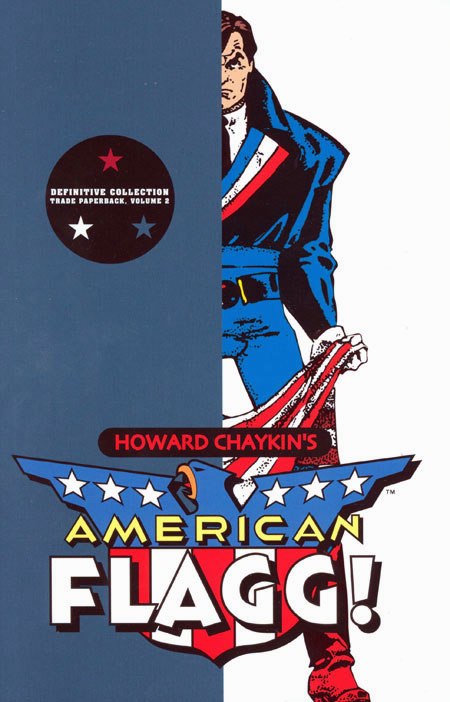
Waving The Flagg!


Reading Howard Chaykin's masterpiece American Flagg might be an ideal way to celebrate this most American holiday.


I found the first volume of this reprint collection a few months ago, and the second one I stumbled upon just a few weeks ago. It contains a "new" Chaykin story featuring the characters. Both volumes look great.
Rip Off

The Sheriff Of Mayberry!


The passing of Andy Griffith calls to mind many hours of enjoying The Andy Griffith Show, arguably the most perfect comedy television show ever crafted for the medium. I have never seen better comedy timing in any show, movie or otherwise than between Giffith and Don Knotts. They were masterful.

Over twenty years ago when I was just starting out as a teacher, I had to leave my wife and girls for a week at a time to work. I was forced to live in a boarding house during the school week and commute home to my family weekly, and to fill in the time, I watched quite a bit of television. Without cable, the options were thin, but one independent station offered up nightly hour-long blocks of The Andy Griffith Show. I'd seen all the shows before, many times, but in that isolated situation I watched the shows with a focus that I'd never done before, seeing the early episodes over and over again during the year. I really developed an appreciation for the craftsmanship of the show.

It didn't hurt either that the boarding house I lived in was filled with furniture from the period. I was to some extent, living that Mayberry life while watching it on screen. I grew up in the country, in a small town demographically very like Mayberry and of course the TV town is mythical in many ways, but there is a core truth to that show which supersedes the details. Griffith and his colleagues created a masterpiece.

I remember too Griffith's outstanding comedy sketch "What it Was, Was Football". Here's a presentation of that canny bit of comedy with some artwork from MAD magazine by George Woodbridge. It's a comedy classic featuring the naive homespun yokel that Griffith made his career on, but which characterization he wisely put on the shelf when he realized the humor in Mayberry was less in his character than in its other peculiar but recognizable residents.


To read the complete MAD magazine version from which the artwork comes see this link.

Rip Off

Tuesday, July 3, 2012

Anger Management On Almuric!


This novel by Robert E. Howard is a puzzler of sorts. It was not published until after his death, when it was serialized in Weird Tales in 1939. Some are suspicious of the authorship, though I don't think there is a groundswell on this point.

The story was adapted to comics form by Roy Thomas and Will Conrad many years ago in Epic magazine. I still have those issues, but I don't have great memory of the adventure. It's been something I've been going to get around to reading for some time. Yesterday I did.


Esau Cairn, the hero of this adventure, finds himself on the planet Almuric by means of a process which is kept secret by the scientist who sent him. It's a clever dodge and points up the fact that the means is of almost no importance to this type of tale. It's sufficient that it worked and let's get on with the show. Cairn is one of the most unlikeable rogues I've ever encountered in fiction. He's a misanthropic brute who is beset by extreme anger management issues. He takes his pugilistic attitudes to his new planet and almost immediately mugs a native for his gear. Later it's shown this guy was a baddie, but I can't get over how Cairn is one of those narcissistic thugs who feels that all the world (and in this case other worlds too) are set against him.

Cairn brags constantly how much better he is than most men and how unusually suited to this new hostile environment he is. It gets a bit tiresome to read his constant bleating on these points. After months in the wild, he at last seeks civilization and finds that the main population of the planet is a gang of barbarians arranged in cities which war with one another all the time. The men are beastly but the women of course are lovely and he finds himself instantly attracted to one in particular, a dame named Altha. Cairn of course finds himself included in this barbarian society, but never seems grateful for the honor the culture affords him. Instead he seems to think they are very lucky to have him.

The main story gets underway when black winged creatures, demons of a sort appear who feast on human flesh and basically lord it over the planet. Of course the dame gets kidnapped and the adventure is on.


The story in Almuric is briskly paced, typical of a Howard story, but even more so. The pedal seems down to the floor from the get go. There is no sense of depth to many of the characters, they merely perform their functions as loyal companions or sniggering enemies as the plot requires. The framework of the story is similar to Edgar Rice Burroughs in his Mars and Venus novels, but in this one the point of view is relentlessly with our "hero" Esau.


Almuric is a diverting entertainment. Some suggest its roughness comes from the fact it's an early draft of a story Howard meant to polish later. That makes sense. It has that kind of rough-hewn character. A major strength of a Howard story is his amazing ability to draw the reader in, and despite my animus to Esau Cairn as a particularly unlikeable character, this story does just that. There's no putting it down once you start it. You must find out how it ends.

I recommend this to Howard fans for sure, but then most Howard fans already know. For others, I'd say don't start with this one. Check out some of Howard's more polished and atmospheric material before allowing the frightful Esau Cairn to be your first blush with a Howardian hero.

Rip Off

Echoes Of Trader Horn!


Trader Horn is a movie which I've been wanting to see for quite a few years now, ever since I learned of its importance in MGM deciding to initiate that studios Tarzan series featuring Johnny Weissmuller. The movie has never been released on DVD, so it was a real treat to catch it at least on Turner Classic Movies yesterday.

The 1931 classic is based on a novel of the same name and is a blend of some few real events and lots of fiction set on the vast continent of Africa. "Trader Horn" was a real person named Alfred Aloysius Horn, known as "Trader" for his work in and among the tribes of Africa.

The movie stars Harry Carey as Trader Horn and Duncan Renaldo as a green explorer named Peru. These two men are traveling the river trading ivory when "Juju" erupts among the tribes and sensing danger they withdraw. Soon the encounter another traveler, a widow and missionary seeking her daughter lost many years before. Trader promises to help if something bad should happen. It does and they find her dead at the foot of a tremendous falls. Trader and Peru head into hostile country, get captured and sure enough discover the lost girl, now grown and having become something of a white witch among the tribes. She at first seems hostile to them, but then is attracted to the handsome Peru and helps Trader, Peru and Trader's main gun bearer and friend Rencharo escape. (In classic jungle movie tradition all the non-speaking porters have been killed.) The rest of the movie involves the quartet and their flight across the African veldt seeking safety.


This movie was shot on location in Africa and there's an absolute ton of footage of animals and natives and such. A lot of this material found its way into the later Tarzan movie as well, thanks no doubt to the fact that W.S. Van Dyke directed both films. The theme music is the same, the look of the titles is the same. There's a lot here which is used later in the first few Tarzan movies. In fact the actor who plays the faithful (and very well realized character) Rencharo is a native African named Mutia Omoloo and his first name was the source of the infamous "Mutia Escarpment" where Tarzan lives.


The movie is most notorious for what happened to Edwina Booth, who played Nina the White Goddess that Trader and Peru rescue. Unfortunately many of the cast and crew contracted malaria and in Booth's case the disease continued to afflict her off and on for over five years effectively ending her acting career. She famously sued the studio but most likely had to settle for far less than she was seeking.

Her near-naked performance is one of the clear attractions of the movie, as can be seen from the poster. It's truly sad that her exposure in all probability is what resulted in her ailments.

The movie clocks in at two hours or more, and is very very leisurely paced. The first hour is mostly Trader and Peru traveling around seeing various animals. The plot picks up in the second half, but still there is a lot of wildlife to be encountered.


One thing that stood out for me unfortunately was the enormous hat that Renaldo wears as Peru. It's the biggest pith helmet I've ever seen, and maybe the biggest hat I've seen on a character in a movie since Rick Moranis played "Dark Helmet" in Spaceballs.

If you get the chance to see Trader Horn by all means do so. Harry Carey gives a fine performance, as does Renaldo. Edwina Booth's a gorgeous lady and dominates when she's on the screen for sure. The standout actor though for me was the somber Omoloo who is allowed to present a black character with depth and sympathy. Trader Horn is not a movie without error in the area of race,but it clearly shows off the African natives to much better effect than almost all other films of the time or anytime soon after.

Any fan of Tarzan needs to see this movie, for the echoes from its production sounded for a decade or more in those Johnny Weissmuller classics.

Rip Off

Monday, July 2, 2012

On The Island Of Lost Souls!


Island of Lost Souls, a Paramount movie based on The Island of Dr.Moreau by H.G.Wells is one of those truly frightening movies from the earliest days of sound cinema. I've had a copy of the VHS version for years but despaired that I could not replace it on DVD along with most all of the other great horror cinema of that time, especially the stuff from Universal. But at long last it did arrive thanks to the folks at Criterion, who offer up quality packages but at somewhat steep prices. That price made me blink, but I was able to cough it up at last.


The Criterion package comes with several extras (though I'd have liked more, especially some more stuff on the Wells story itself). It offers up the movie with a really outstanding audio commentary by Gregory Mank, who does this the best of anyone I've ever encountered. He clearly does his research and carefully times his comments to key sequences in the movie. It's an enhanced viewing to listen to his commentaries. Richard Skal offers up a solid ten minutes of background and insight. There's also a conversation between John Landis, Rick Baker, and Bob Burns which sadly is ripe with personality, but low on actual information. An interview with the original director of the fiasco version of the story from 1996 is oddly done (with weird lighting) and offers up some meager insights into that failed project. A section on Devo, the band which drew some inspiration from the movie is pretty intriguing, but I'd have loved more here. All in all a pretty eclectic gathering but not really as developed as some packages I've come across.


Nonetheless, the main show is the movie and it's a grand mini-epic, a movie directed by Earle Kenton with precision and aplomb. Charles Laughton's Dr.Moreau is a hideous but fascinating creation, much more monsterous than anything he cobbled together on his vile operating table. Beautifully rendered by the great actor.


Bela Lugosi is famously in this one for a short time and offers up his typical over-the-top performance, but truth told it probably took something that large to overcome the wild make-up he has to wear. It's a testament to the strength of Bela's personality that he is instantly recognizable underneath all that fur.


A lot of the talk is centered on the Panther Woman, a part selected with a nationwide talent search which yielded the attractive Kathleen Burke. She's clearly a limited actress in this picture, and one who a lot is demanded of. There's a silent-screen quality to her acting which hurts the subtle aspects of the movie alas.


Leila Hyams (who turned down the role of Jane in the MGM Tarzan movies by the way) and Richard Arlen are very good in the heroic his and her roles necessary to keep this movie morally upright.


Visually the wrestler Max Steinke appearing as beast man Ouran steals a lot of the show. His lust for Lota (the Panther Girl) and later Leila Hyams is palpable and gives the movie a real sense of menace. His grin might the most horrific thing in the movie.

This movie is a spry and nimble story which doesn't waste a second of footage. That's what I love about these early flicks, the story is jammed in and each second is pregnant with meaning. Each scene tells us something, so staying focused on the screen is important. This movie is an excellent example of that kind of efficient and effective storytelling.

While the price tag is steep, the movie is of the highest quality. I recommend Island of Lost Souls for one and all (save the kiddies of course).

Rip Off

Rio Rides Again!


Sometimes I'm flabbergasted by what I miss. I did not know that Doug Wildey's masterwork western Rio was being collected by IDW, or if I did know it at one time, I had expunged that info from my noggin somehow.

I wrote this a few years ago to express my adoration for Doug Wildey's western hero. But now it seems I get my chance to glimpse the unfinished Rio as I wanted to do then, as it is being included in this fifty buck package.

The timing is ideal as I just managed to grab fifty bucks of credit at my local store and I love to spend that on special items of interest. This certainly qualifies!

I'm downright eager to see this handsome package. It's probably a good thing I didn't know it was arriving. The anticipation would've been hard to take.

Here's the solicitation.

Doug Wildey's Rio: The Complete Saga
Doug Wildey (w & a & c)
Doug Wildey was an acclaimed Comic book and comic strip artist, as well as a noted animator. Very much in the school of Milton Caniff and Alex Toth, Wildey was an artist's artist, a storyteller of the highest order, and worked in many genres—westerns and war stories being some of his most memorable. As an animator he created and designed the groundbreaking Johnny Quest series in 1964, which inspired a generation of cartoonists with it's memorable characters, thrilling, breakneck pace, and innovative designs.In 1987 Wildey began one of his most personal works, the story of an aging cowboy and gunfighter, as well as special agent for the President of the United States, Ulysses S. Grant. Wildey created stories full of human drama and historical accuracy rarely seem before or since in the comic book western. This volume collects the entire Rio saga in one handsome collection, including the final, unfinished and unpublished Rio story.
HC • FC & BW • $49.99 • 272 pages • 8" x 12" • ISBN 978-1-61377-210-2


Rip Off

Sunday, July 1, 2012

John Silence!


John Silence is the creation of Algernon Blackwood, a British writer, stalwart creator of ghostly tales and a primary influence on H.P. Lovecraft. Lovecraft considered Blackwood's short story "The Willows" to be the finest weird story of all time. Having recently read it myself, I have to agree it's a masterpiece of subtle horror.

Blackwood made himself a tidy living as a writer, and gained more than a bit of popularity when his "Psychical Doctor" first hit the bookshelves in 1908. Dr. John Silence is a literary investigator with more than a dash of Auguste Dupin and Sherlock Holmes in his make up.

His stories are related to us by his colleague Mr. Hubbard who finds Silence a formidable personality and is constantly impressed, if not necessarily surprised by his always adroit talents. Silence always seems to divine what the nut of the problem is, but not unlike Doc Savage by Lester Dent and others will often withhold his insights from his compatriots.

It seems Silence gained his special knowledge during a mysterious five year sabbatical in or around the Himalayas. In Silence stories, unlike the work of Doyle the supernatural is a real possibility, though Silence merely suggests that what folks think is "supernatural" is merely an imperfect or limited understanding of the full range of what is natural. Silence himself is possessed of psychic abilities which are never doubted in the context of the tales.

So these stories are not Scooby Doo-style debunking tales in which the mystery is revealed to be merely a prosaic domestic crime, but are actually truly weird, though oddly the atmosphere of quiet reason seems never to be sacrificed.

The Complete John Silence Stories available from Dover Books contains the whole canon of six Silence yarns. The first five were published together near the turn of the last century and were an immediate hit with readers. The sixth story was published in 1917.

"A Psychical Invasion" is about a man who seeks to unlock his artistic creativity with a bit of cannabis and unleashes a bit more than he and his family can withstand. John Silence comes to his rescue.

"Ancient Sorceries" is a story mostly related to Silence about a humble man who finds himself drawn to a strange French village in which all the people seem to share a dangerous nocturnal secret. The movie Val Lewton's Cat People was inspired by this one, though you will have no trouble with spoilers since the movie only touches on the elements of the story tangentially.

"The Nemesis of Fire" is a straightforward adventure about a man and his sister and and peculiar heats and flames which afflict the family now and in the past. Silence helps unlock the grisly secret which powers this menace.

"Secret Worship" is another tale told to Silence, and again it concerns a man drawn to a European village, but this time his connection is that once upon a time he went to school there. But it seems what he remembers and what was real are two different things indeed.

"The Camp of the Dog" offers up a closer look at Mr. Hubbard who while on a camping trip in European countryside with some friends is forced to call in Silence when a seemingly feral visitor troubles the group and one woman in particular.

"A Victim of Higher Space" is the only story not in the original collection and offers up a story with a somewhat different tone as a beleaguered and unassuming man seems to have trouble staying physically in the moment. The story is shorter than the rest and seems almost self-mocking in its delivery. (This one made me think of those plum Steve Ditko sci-fi micro-epics during the 50's.)

All of these are diverting tales and I highly recommend them. If you've not sampled John Silence, or just read "Ancient Sorceries" or "Secret Worship" you owe it to yourself to try the others in which he plays a more central and active role. "Nemesis of Fire" and "The Camp of the Dog" both offer up real action for someone looking for a bit of pulp energy.

Dover editions are always cheap, and that makes The Complete John Silence Stories a real bargain in entertainment. Or if you want to taste these classics for free, check out this great link.

Rip Off