Showing posts with label C.S. Lewis. Show all posts

Monday, December 30, 2024

The Cinema Of Narnia!


After the pioneering blockbuster success of The Lord of the Rings, studios were itching for a piece of the epic fantasy pie. One property that immediately came to the mind of any fan of Tolkien was the tale of Narnia by his friend and colleague C.S. Lewis. In 2005 we got The Lion, the Witch and the Wardrobe from Disney. What annoys me more than a little is that in the expansive supplemental documentaries and such not a single person indicates the success of the Peter Jackson movies as the impetus for this movie. What's more they act like filming in New Zealand was difficult but par for the course. It's a small thing, but it annoyed me. 

That said, I really enjoy The Lion, the Witch, and the Wardrobe as directed by Andrew Adamson. It's at once true to the books and still manages to give the viewer a splendid fantasy epic with more actual violence than I'm sure Lewis would've been comfortable showcasing. In books fights can seem ephemeral whereas the lead up to them is crucial. In film we got to see it and we do here. Peter (William Mosely), Susan (Anna Popplewell), Edmond (Skandar Keynes) and Lucy (Georgie Henley) are on hand to face off against the White Witch. I cannot take my eyes of Swinton in this role, in which she does what many a movie villain does, and that's steal the show. As good as the animated Aslan is with voice by Liam Neeson no less, this becomes Swinton's movie from the moment she slides up in her demon sleigh. The only real visual competitions she has are those magnificent centaurs who battle on the side of good. This is a heart-warming movie with a message, but it's a pretty decent actioner as well. 


The same crew go at it again in the sequel Prince Caspian. Ben Barnes plays the title role of the displaced prince of Narnia who flees for his life when he becomes superfluous to the tyrant Miraz, leader of the Telmarines, when his actual son is born. This one is pretty dang violent for a movie of this kind. Again, the target audience are those Tolkien fans looking for something between hits of Jackson epics. Our original four are back and after years as kings and queens in Narnia they come with kills. Despite youthful bodies they seem to have retained all the muscle memory they had in Narnia as adults. Peter Dinklage is on hand as Trumpkin the dwarf who seeks the lost kings and queens but doubts their ability to help. Warwick Davis is Nikabrik, a dwarf who has a hard time letting go of the past. Eddie Izzard gives voice to Reepicheep, the mouse with a sword. All the parts are here and they work well, but again this movie owes much of his structure and even some key scenes to the Rings movies. I'm not complaining, but I just wish they'd own it. 

The series gets kicked to the curb by Disney before the third in this trilogy hits the screen. It's up to 20th Century Fox to step in to bring us The Voyage of the Dawn Treader. The scope seems smaller for this one than the previous films. It necessarily reminds me of all those Sinbad movies which were great B movie fun, but this is a flicker which has an A movie pedigree. Edmond and Lucy return to Narnia and join Caspian aboard the Dawn Treader to find seven lost lords who fled Narnia when the Telmarines invaded so many years before. They are joined on his adventure by their cousin Eusace (Will Poulter, who does a great job) and Simon Pegg steps in to voice Reepicheep. This one gets a new director in Michale Apted and a screenplay which diverges from the original story in several ways. Some magical hoodoo is added about seven swords and a curse which is attacking all of Narnia if left unchecked. The bits and bobs are mostly here, but the overarching quest for something greater than themselves gets actively muddled. I'm glad this one got made, but I wish it had been a wee bit better. 

And that wraps up my two-month long overview of The Chronicles of Narnia. It's been a treat diving into the Lewis mythology again after decades away from the books and years away from the films. The Narnian books are advertised as children's classics and they are, but there's plenty of richness for any adult to savor in these admittedly somewhat overly reverent yarns. 

Rip Off

The Television Of Narnia!


Before the big-budget Disney efforts to adapt the Narnia tales, the BBC did its own little take over a decade before. As was to be expected they began with a sprawling adaptation of The Lion, the Witch, and the Wardrobe in 1988. It's a devoted adaptation of the story, following the storyline closely and spanned six episodes. There is some clever use of puppetry to bring Aslan to life and he's given a very reflective and thoughtful but authoritative voice by Ronald Pickup. Barbara Kellerman is outstanding in a bravura performance as the White Witch. When she got mad, she made me wince a time or two. Core to adapting these stories is casting the children and this got it right. The young man who played Edmund (Jonathan Scott) in particular made the most of his role and Peter (Richard Dempsey), Susan (Sophie Cook), and Lucy (Sophie Wilcox) are all quite good. There is some animation used in addition to the costume work to bring the Narnian creatures to life, and one might just have to accept this collision of styles or it's going to ruin this effort for you. There's a gentleness to this production, as if they know they are handling precious materials. 


The next BBC effort was to adapt both the novels Prince Caspian and The Voyage of the Dawn Treader in 1989 and between them also offered up six episodes. While discrete efforts technically, these are really two halves of a single story, featuring Caspian. When we first meet him of course he's but a boy unaware of the truth about his family, but who with the help of Peter, Susan, Edmund and Lucy is able to lead the Narnians to victory over an invading force which had occupied the country for many years. The highlights of these efforts are nearly all in the Dawn Treader section, which gives the viewer some crackerjack sea adventure. Warwick Davis is on hand as the gallant mouse Reepicheep in both stories. Caspian is a flawed man as King and while he is driven by a desire to do good, often falls victim to other desire. The introduction of Eustace (David Thwaites) and his constant complaining adds a real spice to that part of the tale. The young actor really gets a chance to annoy. His turn as a dragon is well wrought as well given the limits of the era. 


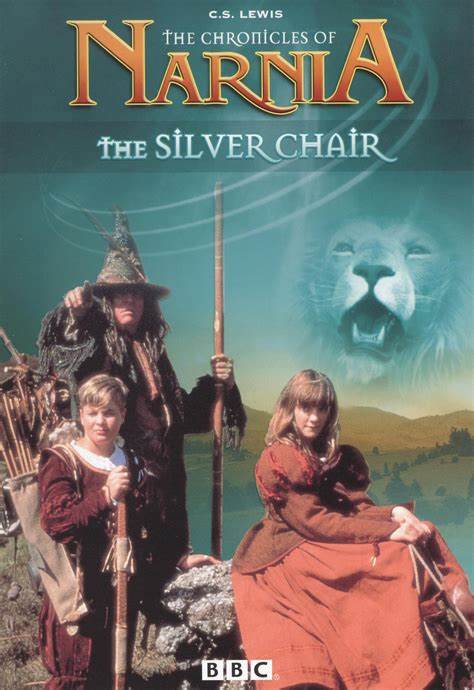
The BBC effort closes out in 1990 with another six episodes adapting The Silver Chair. Eustace is back and welcomes a new character in Jill Pole (Camilla Power). These two are whisked into Narnia and given a tough mission to find the missing heir of King Caspian -- one Prince Rilian. They find an ally in Puddleglum, a dour chap played delightfully by Tom Baker. Barbara Kellerman returns as another evil witch character, this one operating underground. Warwick Davis is on hand again, this time as an owl named Gilmfeather. This adaptation is true to the book save where they opt to juice up the ending a bit.

(Aslan and Friends)

All three of these efforts run over eight hours and adapt four of the seven novels. I wish they'd done them all, but really the last three novels are all mostly insertions or nifty brackets for the stories which are told. They are oddly apart from these core stories. 

More adaptations of Narnia later today. 

Rip Off

Sunday, December 29, 2024

The Last Battle!


The Last Battle is the seventh and final installment of The Chronicles of Narnia by C.S. Lewis and was first published in 1956. As all the others had been, this one was illustrated by Pauline Baynes. Lewis starts this story in a strange place, a quiet section of Narnia where we encounter Shift a talking ape and Puzzle a talking donkey. Shift dominates Puzzle and takes advantage of him. When a lion's hide ends up in his mitts, he concocts a scheme to have Puzzle pretend to be Aslan. The creatures of Narnia have not seen Aslan for many years and if you keep him at a distance and in the shadows, he almost resembles the great Lion who created Narnia. 


The plot works all too well as Shift uses men from Calormen to enslave the Narnian talking beasts and use them for his own enrichment and comfort. Key portions of the Narnian forests are cut down, slaying the dryads who embody them. When King Tirian becomes aware of this sacrilege, he and his ally Jewel the Unicorn slay two Calormenes in haste. Not realizing the true nature of the threat to Narnia they surrender themselves to Shift's forces and Tirian at long last begins to suspect the truth and his error. He remembers how in times past children from another world came to Narnia in times of extreme strife and calls out. He breaks through and in answer to his summons, Eustace Scrubb and Jill Pole arrive back in Narnia. 


The arrival of Eustace and Jill give Tirian support after freeing him. They rally in a stocked tower and pretending to be the enemy head back into the camp where they free Jewel and discover Puzzle. Tirian learns that the trust in the long unseen Aslan has weakened and potential allies in the fight, even after learning the truth about Shift and his schemes reveal they no longer wish to serve Aslan as well. Even more devastating news rocks our group when they learn of a full-force invasion by Calormen which has sundered the Narnian forces in the capitol of Cair Paravel. That only prepares our heroes for the final battle which extends further than they can imagine. 


The Last Battle shows us a Narnia of talking magical creatures who have lost touch with their origins. The underlying truth of their existence is confused by the introduction of an ape's story. The analogy Lewis wishes to draw with modern Christianity couldn't be clearer. This wrap up to the saga does what I suppose Lewis wanted, but it does get more than a tad intentional preachy in the ending. That said, there are a few shocks and even a disappointment for the reader as well. These books are worth the time. 

Tomorrow, I take a glimpse at the sundry film and television adaptations of these tales of Narnia. It's a double-header so come prepared.  

Rip Off

Sunday, December 22, 2024

The Silver Chair!


The Silver Chair by C.S. Lewis was published in 1953 and is the fourth book in The Chronicles of Narnia. The book featured illustrations by Pauline Baynes. It is the first book which does not feature a member of the immediate Pevensie clan as a protagonist, but it does feature Eustace Scrubb, a cousin. Eustace was featured in the previous novel The Voyage of the Dawn Treader and he matured mightily as a consequence of his adventures in that book. 


This book starts a year or so later and introduces us to Jill Pole, a young girl in the same school as Eustace, who is being harassed by other students in the school. Lewis is highly critical of modern schools which deviated from traditional formats for education and which in his opinion failed to form the character of their charges. In an attempt to save her Eustace and Jill end up in Narnia where she meets Aslan who gives her a quest. She shares this with Eustace, and they find themselves seeking the lost prince of the kingdom, the son of King Caspian. As it turns out, this time decades have passed since Eustace was last in Narnia and Caspian is an old man. 


Eustace and Polly are led to Puddleglum, a Marsh-Wiggle who despite his dour outlook becomes a reliable guide for the two children as they trek through harsh conditions to find the lost Prince. There are many hardships, but none so immediately dangerous as a city full of giants who consider mankind a delicacy. They are led on their journey by signs given to our young heroine by Aslan himself, but they keep bungling the signs. Nonetheless they eventually end up in a sprawling underground realm where all manner of secrets are revealed, including that of the insidious silver chair. 


In many ways this story struck me as the most classic adventure yet. We have limited personnel on his trek and the danger they encounter feels somehow a little grimmer than in previous books in the series which always kept a somewhat more whimsical character. The book may suffer from too many endings, but that's common in fantasy I find. 


Next time wrap all this up with The Last Battle

Rip Off

Sunday, December 15, 2024

The Voyage Of The Dawn Treader!


The Voyage of the Dawn Treader by C.S Lewis was published in 1952 and is the third volume of The Chronicles of Narnia. In this one, two of our original child heroes age out of the Narnian experience leaving only Edmund and Lucy to travel to the famous fantasy land. They are joined this time by Eustace Scrubb, their cousin. He's been raised without the benefit of a traditional rearing by his parents whom he refers to by their first names. He's a spoiled bully who is dragged into Narnia and joins Edmund and Lucy aboard the ship which gives the book its title. Pauline Baynes once again illustrates the book with great aplomb. 


King Caspian is aboard with a hearty crew, and he is on an epic quest to voyage to the far ends of Narnia in search of seven lost lords of the land. Our trio of modern Earth kids are piped aboard, and the quest begins. Back for more too is Reepicheep the dashingly heroic sword-wielding mouse. Reepicheep immediately has trouble with Eustace who doesn't understand that in Narnia a sour attitude and a few pranks can get sword put where you'd rather not have it. 


Our band of explorers do indeed find the seven lords they search for, but those unfortunate (mostly) fellows have found all manner of dangers on islands along the way to the end of the Earth. Some are still alive and some are not. Eustace undergoes a strange transformation, both in body and character on the voyage. In truth the children are somewhat secondary in this story, with Lucy and Eustace getting the most attention. Lucy's constant trust in Aslan is an absolute boon to the voyage time and again. The surprise star of this adventures is Reepicheep, who is always seeking danger and adventure. The image of such a small creature being so brash is heartening in many ways, though of course his choices are often irresponsible. 


This remains my favorite story in the series. It's filled with all manner of oddities, and every few chapters a new aspect of the world of Narnia is revealed to the reader. The revelation at the end of the sea is a triumph for Lewis. And no reader will never forget the Dufflepuds -- enough said.


Next time The Silver Chair

Rip Off

Sunday, December 8, 2024

Prince Caspian!


Prince Caspian by C. S. Lewis was first published in 1951 and is the second published installment and fourth chronological entry in The Chronicles of Narnia. In the first volume we met four children -- Peter, Susan, Edmund, and Lucy who find their way into a magical land and after many adventures spend long lives there, only in the end to return to the very moment they left. Children again, but older, these four are headed for school and while waiting for the train are swept away to an island and eventually Narnia itself. 


But none of them are not the title character, that is Prince Caspian the legitimate heir to the throne of Narnia, but who unbeknownst to him has been raised by King Miraz, the man who defeated his father and rules as an interloper, the leader of a peoples called the Telmarines. When Caspian is made aware of these circumstances, he escapes and finds his way to the creatures of Narnia who have survived. 


It turns out that hundreds of years if not thousands have passed since the four children left Narnia (in Narnian time) and our quartet find themselves among the ruins of their old castle. Eventually they find their way to join forces with Prince Caspian and the other Narnians, all the while being led by a returned Aslan (after a long, long time). They must fight for their lives against the King of the Telmarines and forces. 


Prince Caspian is loaded with lots of great characters, such as Doctor Cornelius, Caspian's tutor; D.L.F. (Distinguised Little Fellow), a dwarf; and Reepicheep the swashbuckling leader of the mice. The ultimate solution to the story seems a bit bloated to me, requiring a lot of moving parts, but as much as in any of the books so far, I was swept along by a pretty nifty adventure. The fact that his "Christian" story has characters like a reveling Bacchus and his maidens is remarkable. 


Next time what has long been my favorite of the Narnian books -- The Voyage of the Dawn Treader

Rip Off

Sunday, December 1, 2024

December!


The barbarian welcomes you to the bleak month of December. The year of 2024 has been a memorable one to this point for all the wrong reasons. I want to right the ship and give us all something to smile about. That Neal Adams illustration of Robert E. Howard's famous Cimmerian is a tip off. It's nearly all barbaric action this month -- fantasy with a finishing blow.  


In the somewhat warmer climes of Narnia, we reach the end of that delightful children's saga by C.S. Lewis. For Lewis this all leads to a dramatic final battle which is good news for many of us. 


Frank Frazetta gets represented a few times this month. One is with Thun'da, the one comic book that the great artist illustrated all the way through. That's on tap as well as more recent sequel by other talents. 


Idyl by the late Catherine Jeffrey Jones is poetry. I don't pretend to understand it all, but revisiting these supremely crafted pages which originally appeared in National Lampoon are always intriguing and in the end heart-warming. There are other things from Jones as well such as I'm Age from Heavy Metal


And speaking of heart-warming, one needs look no further than Peter Beagle's magnificent and elegant The Last Unicorn. A striking mythology for a modern time sorely in need of it. 


It's the allure of more ancient myths which attract the reader to Poul Anderson's The Broken Sword. This magnificent saga was first published in the same year as Tolkien's great yarn about Hobbits, and some hold it higher regard. 


No wants to see Groo the Wanderer. He's a mental deficient who poses a threat to all those who come in contact with him. He blithely wanders (hence the name) through life creating havoc not only for villains, but heroes and bystanders as well. He's a barbarian they can't kill -- no matter how hard they try. I take a glance at one of the sturdiest barbarians in comics. 


One of my favorite Marvel yarns is when the Hulk got shrunk and found love and courage in a strange sub-atomic world. This turned into a downright saga. I was a downright Hulkamaniac back in the day, and this one always stood proud among the many tales about old Jade Jaws. 


And speaking of shrinking, the master of being little -- The Atom found himself having to retool to survive when he's stranded in a tiny world for a time. He finds adventure and romance in the smallest kingdom on the planet. 


The Viking Prince featured the astounding artwork of Joe Kubert, who caught the feel of the bygone age with a deft but firm touch. These tales are vivid when often comics of the time were quite timid. 


Kubert supplied the covers for DC's Nightmaster stories in Showcase, but it was left to an up-and-coming Berni Wrightson to draw the story. 


But Nightmaster was just DC sticking its collective toe into the Sword and Sorcery genre. In 1975 they took a deep dive when they cobbled together their "Adventure Line" which was filled with vintage crimefighting, prehistoric tales of survival, and scuds of swords and oodles of sorcery. I want to take a look at each of the comics that DC launched in this campaign, and I want to do it in the order they pictured above beginning with The Avenger and Justice Inc and sliding right all the way to Kong. 


This should be a ton of fun and is a project I've been thinking about for quite a while. I just needed a few comics to make it happen and now I have them. 


And I haven't forgotten about Neal Adams who kicked off this introductory post. He'll be popping up here and there as the final month of 2024 tumbles along to its inevitable conclusion. 

Rip Off

Sunday, November 24, 2024

The Horse And The Boy!


The Horse and His Boy by C.S. Lewis from 1954 was the fifth book published in The Chronicles of Narnia, but it is the third one to read in the chronological order. It is the story of Shasta, a young orphan who is raised as a slave in the kingdom of Calormen. He longs to escape his situation and when he meets Bree, a talking warhorse, he gets his chance. Bree is a talking horse from the land of Narnia and was taken while still quite young and trained for the battlefield. The two team up and head for Narnia. 

The duo soon meets Aravis and Hwin. The former is a princess longing to escape an arranged marriage. The latter is another talking horse, also longing for Narnia. The four join forces and we follow their adventures. They are forced get disguises to travel through the bustling city of Tashban where they get separated. Shasta is mistaken for a prince named Corin when he meets up with King Edmund and Queen Susan from Narnia. The latter two are the adults who we are told ruled Narnia for many years before heading back through the wardrobe in the previous novel. 


There is more adventuring when Shasta at last gets out and heads to a massive graveyard where they quartet had arranged to meet if things got out of hand. Eventually all four are reunited and they head quickly to Narnia, because Aravis has become aware that Prince Rabadash is bent on attacking the magical territory because Queen Susan rebuffed his offers of marriage and had successfully escaped by ship from Tashban. In this quest across a desert the quartet encounters a lion who proves to be quite important their individual stories. 


This volume read more like a traditional fantasy or fairy tale adventure. A young boy finds a bit of a magic who begins to take advantage to change his circumstances. There's quite a bit of violence in this story, but the bloodshed is hardly front and center, nor the point of the novel. Bree the warhorse is a dandy character, who is confronted with some true dilemmas. We do get a sense of what Narnia is, and how it is perceived in the grander universe that Lewis has concocted. Pauline Baynes illustrations are particularly effective in the volume that I read. 


Next time, which will be in December, we will get around to Prince Caspian

Rip Off