Monday, November 27, 2023

The Mammoth Book Of Best Crime Comics!


The Mammoth Book of Best Crime Comics is a real feast. All in glorious black and white, this anthology brings together crime stories from across the globe and from many decades. I will admit that some of the experimental stories, such as two by Alan Moore that form a beginning and ending for this collection elude me somewhat, but the bulk of the material is totally accessible. The beauty of a collection like this is if you don't much like the story you're reading, you are confident that the next one will strike your fancy. 


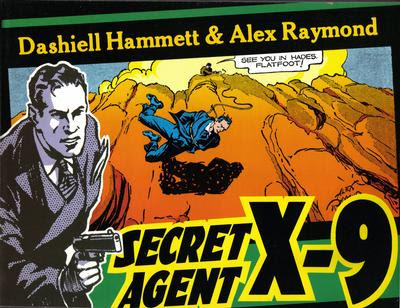
Some of the highlights of the collection for me are Jack Cole's "Murder, Morphine and Me!", Will Eisner's "The Spirit: The Portier Fortune", Alex Toth's "The Crushed Gardenia", and Johnny Craig's "The Sewer". There is a large section of the book dedicated to Secret Agent X-9 by Dashiell Hammett and Alex Raymond, and Ms.Tree story "Maternity Leave" by Max Allen Collins and Terry Beatty gets a large hunk as well. There are two stories featuring art by Bernie Krigstein, one dandy tale titled "Lily White Joe" and a later totally strange yarn form the 87th Precinct titled "Blind Man's Bluff". The notes indicated the sheer oddball nature of this yarn drove Krigstein away from comics for good.


Likewise, artist Ed Robbins left the field when his comic strip with Mickey Spillane "From the Files of Mike Hammer" was censored and ultimately cancelled for the bondage scene above. Sanchez Abuli and Jordi Bernet turn in a classic with a Torpedo 36 story called "The Switch". Neil Gaiman and Warren Piere create one of the most depraved comics I've ever read with "The Court". El Borbah created by Charles Burns is a ton of fun, weird and offbeat fun in the story "Love in Vein". Our old friends Joe Simon and Jack Kirby check in with "The Money-Making Machine Swindlers" and Bill Everett turns in a great artistic effort on "The Button". And I've always been a fan of Paul Grist's Kane series represented here with the story "Rat in the House". 

Below are some of the covers for the comics and such in which many of these stories originally appeared. As you can see, it's an eclectic gathering of artistic styles as are the stories themselves. At a cool twenty bucks (when I bought it anyway) this collection is an entertaining bargain.


Rip Off 

Sunday, November 26, 2023

The Spider Versus The Empire State!


What a bumpy road we are on with this whole Democracy thing. Things that were unstated givens a decade aga now have to be hammered out in detail in public to make the point. No, you don't threaten to attack judges or their aides because you disagree with their decisions. No, you don't join with your allies and storm the halls of Congress to overturn an election which didn't turn out as you imagined it ought to have. Since the publication of this book featuring three Spider pulp sagas from the 1930's, rights have been stripped away from women in regard to their ability to control their own bodies. Medical care has been criminalized. A sliver of society which doesn't conform to traditional gender roles is under attack in state after state for simply wanting to be who they really are. Books have been banned in libraries and schools across the country because they might challenge children (and adults) with offbeat notions such as historically documented state-supported racial bigotry. In the face of this reality, I offer up a book. The Spider Versus The Empire State by Norvell W. Page is a trio of Spider pulp stories pitting the ultra-violent hero against a brutal police state established during World War II in New York City.


The advertising blurb on The Spider volume reads "They said it couldn't happen here." I used to think that too. But I've read the position papers and I've heard the relentless hateful rhetoric and I've seen political leadership quail in the face of implied threats of violence, and I've seen our institutions of jurisprudence waffle when confronted with a demagogue who won't shut up. Yeah, as it turns out it could happen here in these United States, and it is. There is still time to hold it back, but sadly at this point all we're doing is holding it back. We'll know more this time next year. 


On a lighter note, below are the cautionary covers for the pulps the trio of Spider stories originally appeared in. The story of a Fascist government seizing power in America and rearing up a police state might serve as balm for my troubled spirit in these unusual days. Fiction has that power, the power to free the mind, not confine it.
  

Norvell Page really hits it out of the park with this riveting adventure of The Spider. The first of three Spider novels dubbed "The Black Police Trilogy", this story relates how an unknown criminal called "The Master" and "The White Face in Mirror" brings to heal the entire state of New York by installing a corrupt Governor and unleashing on the populace an army of black-uniformed troopers known simply as The Black Police. These thugs use tactics and techniques out of the Middle Ages and any number of oppressive political regimes to render the people terrified to act.

The City That Paid to Die begins in slam-bang fashion as Richard Wentworth alias The Spider rushes to save his former opponent, Police Commissioner Kirkpatrick of New York City from the Black Police who under orders from Governor Whiting and a corrupt Legislature are taking over normal police operations in NYC and across the state in general. After several desperate battles The Spider heads to Albany to confront the Governor only to be driven away. He then sets about to set up a guerrilla operation to fight against the tyrannical forces, while his beloved Nita Van Sloan and his Sikh assistant Singh also join the fight.

The novel is action-packed and breathlessly paced as Wentworth is a veritable dervish of violence, killing Black Police left and right as he chances across them. He leaves the mark of the Spider on their foreheads, but fabricates the fiction that The Spider has given him permission to do so. The war rages for page after page until a dramatic climax brings Wentworth face to face with the Master, a secret criminal who manipulates the events from hiding and in disguise. The novel leaves things up in the air, as The Spider's victories, significant though they are, leave the tyrants in power still.


This is a thrilling adventure, but despite its pulp origins is one which smacks on many serious points. First published in 1938, the novel plays on the very real fears then abroad in the country that Fascism could well indeed rear up and squash the cherished freedoms of the United States. Sadly because of the rigors of the Depression, some folks had even called for such a dictatorial approach to help solve the ongoing economic woes of the nation.

The threat of such a tyranny in these United States seems a quaint idea, but many of the details of Page's novel put me sadly in mind of some recent events. While there is no Black Police army, made up of mostly criminals, abroad in the land today, police have become more and more militaristic over the last several decades as one allegorical war after another has been waged. The shakedown operations conducted from the offices of the Governor in this novel disguised as taxes do unfortunately make me remember how property is seized minus any court order when a drug bust is conducted. People don't demand the rule of law when it comes to dealing with lawless often because they cannot imagine how it might one day impact them too.

So, while the modern America does not in any serious way resemble the nightmare society described in this novel, it is with some reluctance that I do see echoes here and there, at least in part of what Page so ably describes.


The Spider At Bay is the second novel in the infamous 1938 "Black Police Trilogy" from Norvell Page. The action picks up a few months after the last novel which detailed how a criminal cabal had seized control of the state of New York. The Spider battled back against the "The Master" and his allies controlled from the Governor's mansion. The Black Police were criminals running roughshod over the people, stealing their resources through illegal taxation and intimidation and murder.

As this second novel unfolds the whole struggle has become a full-fledged war. Richard Wentworth, The Spider himself, or at least pretending to be in this story leads his troops known as "The Commander". The battles rage in a New York almost reduced to Medieval standards though the fight is waged with modern weapons.

One of the most insidious weapons is a plague similar to leprosy unleashed on the people. In a weird bit of propaganda the rumor is spread that only those who struggle against the Black Police will contract the disease. Needless to say it makes the ability to gain support difficult. Some help from the outside does appear in the form of a G-Man by the name of Miller.

The Spider even manages to slip out of the state to meet with The President of the United States but since the veneer of authority still clings to the Governor's Black Police forces, the PotUS  is limited in what he can do. The Spider returns to his people only to fall victim to the evil forces. But that's not the end of the struggle.

This novel really reads almost like some fantasy adventure, there's a distinct ancient feel to the nature of the struggle. The Spider and his forces seem much like Robin Hood and his Merry Men, with Nita Van Sloan becoming Maid Marion. There's even a priest named Father Flower who serves the rebels.

The Plague too gives the story an ancient feel and the idea that modern people would believe the hokum about how it was contracted seems weird until you take a moment and remember that even today folks still fall all too quickly for demagogues who claim that all manner of calamities are the result of some moral failing.

New York seems almost like a pocket universe in this story, apart from the greater U.S., a land of death and mayhem and murder. Page's relentless storytelling doesn't let the reader pause to reflect much. But I was put much in mind of what it must be like to try and survive in modern day Syria, a land torn by endless struggle left alone to fight it out


The Scourge of the Black Legions from the November 1938 issue of The Spider is the third and final chapter in what is called "The Black Police Trilogy". In the previous two novels we were introduced to the evil "Master" who uses corrupt politicians to seize power in the state of New York and bring about a tyrannical rule which uses extortion, biological warfare, and blatant murder to terrorize the populace and under the disguise of constitutional authority hides these crimes from the federal government. In those two novels Richard Wentworth pretending to be The Spider leads a rebel force against the Black Police forces, trying time and again to discover the identity of "The Master" and dispose of him.

In this final installment the pacing is very much like an old-fashioned movie serial, with an episodic plot that takes the Spider from danger to danger with not much aside from the rigors of plotting to connect them. He confronts poison gas in a dungeon, then runs from a cascading deluge, and such as that. The overall impression is one of ever-increasing momentum leading the finale which does reveal the secret of "The Master" and does resolve to some extent the wild and ferocious events.


The story does reach a satisfying resolution, though as is often the case with these romps, the chase is superior to the payoff. The picture of society painted by Page's trilogy is a grim one indeed. Clearly there was a nervousness in the country about the future fabric of society if the wrong people came to power. The creators saw what was happening in Europe and they certainly felt that it could indeed happen in America. There is speculation that The Spider's battle against the Black Police is an adapted tale originally intended for Operator #5 's epic "Purple Wars" series. It's suggested that Norvell Price was considered as a replacement and produced these stories, then when the publishers went another way, used them in The Spider. 

While it likely will not happen in the uproarious fashion detailed in his unruly trilogy, we should all realize that the comity and good order we take for granted is far more fragile than we imagine.


Rip Off

Saturday, November 25, 2023

The Spider Chronicles!


This is a heady collection of Spider tales from Moonstone. The Spider Chronicles kicks off with an introduction from Denny O'Neil and features fantastic illustrations from Tom Floyd throughout. Doug Kaluba's cover is a powerful introduction to the proceedings. As with any anthology, the quality of the stories vary, but most of all of them successfully tap into that Spider magic in some ghastly way. 

"City of the Melting Dead" by Martin Powell is a heady tale by one of my favorite writers which pits the Spider against a malevolent foe dubbed "The Crucible" who has a deadly and horrific formula that melts human flesh. This murderous enemy is put down in the most distinctive of ways. 

"King of the City" by C.J. Henderson shows how the Spider is able to use the forces of gangland against each other in their mad scramble of greed and avarice. The true king of the city is revealed by the story's bloody finale. 

"Death from a Blood Red Sky" by Elizabeth Massie features death from above as a murderous woman uses an autogyro to wreak havoc and murder from the safety of the skies. Her killing method is singluar and savage. Her rampage is put down by the Spider with great cost to himself. 

"Death Reign of the Zombie Queen" by Howard Hopkins has Nita fall victim to the powers of a deadly woman seeking power and revenge on men for the crimes committed against her. She has created deadly cannibalistic zombies to support her deadly play for power. 


"March of the Murder Mummy" by Will Murray is a wild story which delivers on the title. We have a murderous mummy who seems to have an insatiable lust for gold. The Spider is taxed to the limit to bring down this seemingly ancient menace that can shrivel men in its grasp. 

"Regrets Only " by Chuck Dixon is a story focused on Nita Van Sloan. She is in attendance at a dinner party which turns into a potential massacre when brutal thieves and murderers overwhelm the city's elite. The Spider is seemingly occupied with another crime and Nita fears she is all alone. 

"The Marching Madmen" by Bill Crider is a wild story about an insane mob which in defiance of death and seemingly impervious to pain attack a collection of the city's most important folks. The Spider is at a loss how to deal with this threat, even to the point of seeming to lead the maddened mob at one point. 

"Fear Itself" by Joel Friedman and C.J. Henderson sets the Spider against the most ancient threat of Set and of Monks older than time. Also on hand are deadly giant reptilian beasts all too ready to rend people apart for food. These monsters are under the thrall of the Serpent Men. The Spider needs magical help to solve this case. 

"Blazing Barrels at the Reich House" by James Anthony Kuhoric is set just as WWII is coming to an end, but while the Third Reich might seem to have fallen, a mysterious zeppelin delivers deadly Nazi agents with jet packs to a Washington party at which the President is scheduled to appear. The Spider is all that stands between the President and death, and I haven't even mentioned the odd leader of the pack. 

"Senor Suicide" by Steve Englehart is a bizarre tale which begins when the Spider shoots himself in the face. We learn that the whole of the city is consumed by the rays of a device which creates emotions, especially those leading to deadly behaviors. People commit suicide by the thousands and even airplanes fall from the sky. It's all the Spider can do to save himself let alone his fellow citizens. 

"Wheelman for Terror" by Shannon Eric Denton and John Helfers is an unusual Spider story told from the perspective of a simple thug named Len who just wants to make his way in the mob. He's diligent if decidedly uncaring about his fellow man, but he makes a name for himself when he seemingly kills the Spider. While he feels he's at last a success, his fame carries a cost. 

"More Souls for Hell" by C.J. Henderson puts the spotlight on Ram Singh when he finds himself all alone having to defend the Wentworth Estate from a gang of thieves decked out in black. With blades only he cuts a lusty and savage swatch through the interlopers and so ends his boredom at having to stay behind when The Spider was elsewhere. 


"Caught in the Crossfire" by Ann Nocenti finds Wentworth and Nita in the Bahamas aboard a gambling boat which finds itself accosted by classic gangsters and real-world pirates led by a fascinating creature called "The Red Slash". It's bloody mayhem as a Monopoly game becomes a real contest between deadly agents from several quarters. This one really gets inside the mind of The Spider. 

"The Invisible Gang" by Ron Fortier features a malignant female Fagan who uses her youthful charges to carry out murderous robberies of gangsters setting off a bloody gang war. The Spider is busy dealing with the bloody consequences and has little time to find out the true nature of this invisible menace. 

"The Devil's Druggist" by Robert Weinberg focuses on a horrifying mystery of poisonous aspirin which seems to find its way into all brands. The real secret of how the poison is being delivered sets up a wild finale which pits the Spider against some exotic and quite deadly enemies. 

"The Mad Gasser of Mantoon" by Joe Gentile tells the tale of a small town which suffers from a madman who silently sneaks around and silently pumps a weird gas into the homes of various citizens. The connection between victims is hard to fathom and the motive for the crime maybe even more complex. And then there's the problem with the FBI men who seem to want to frustrate the investigation. 

"The Calling of The Spider" by Mort Castle is a story from the early days of the Spider in which Dick Wentworth might have had less lethal aspirations for his crusade against crime. In a story set among the music industry as well as a deadly drug culture, this story perhaps explains why The Spider deals out justice with such ferocious intensity. 

"The Spider and the Monster Makers" by Christopher Mills is the story of a madman who infects young women with a horrific disfiguring disease and uses that threat to blackmail the rich and well-to-do of the city. The true secret of the villain known only as "Proteus" is even more horrific than we at first are led to believe. 

"Banquets for the Damned" by John Jakes wraps up the collection as Jakes pays homage to his favorite pulp hero with a story set in Hell's Kitchen, and never has that name been more accurate. A wave of madness and murder sweeps through the city when a foreign chef sets up shop in town. His ultimate motives are sadly even more of the times. 

These are pretty dang good stories overall. The beauty of a collection like this is that if a certain story isn't really thrilling you, there's the pleasure of knowing a new one is just a few pages away. The sad part is that when a tale is really potent, you know it will wrap more quickly than you might prefer. Moonstone published a lot of these kinds of collections and this one is the best one I've read so far. 

Rip Off


 Rip Off

Friday, November 24, 2023

Mickey And The Phantom Blot!


My favorite Disney villain is without question The Phantom Blot. The enigmatic Blot is the very essence of mystery, a mere shape of a character, an animated blackness. The simple elegance of the design is at once compelling and incredibly effective on a comics page. The Blot stands out by fading into the background, ideal for a thieving menace with an ego. 


The Phantom Blot first appears in the Mickey Mouse comic strip beginning on May 22nd, 1939 and the story ran until September 9th, 1939. So for the entire summer of that year Mickey fans were treated to one of the Mouse's best mysteries and my favorite Disney villain. There is something frightening about how Floyd Gottredson drew the Phantom Blot, despite the character being no more than what the name suggests, a black shape. 


The plot of the story was lifted from a venerable source -- Arthur Conan Doyle's Sherlock Holmes. In particular it is a story very similar in many respects to "The Six Napoleons". Mickey is called in by Chief O'Hara to assist with a crimewave in which only a particular brand of camera is being stolen. The cameras are broken open and left behind and that seems to be all the mysterious Phantom Blot wants. Mickey gets on the case and is captured by the Blot several times and subjected to some wild Rube Goldberg style methods to kill him off. But of course, he outwits the trap and uses disguises to get to the bottom of the mystery. The story ends with a wild chase and the Blot is even unmasked, though no name is  provided. 


The Phantom Blot returns in the May 1964 issue of Walt Disney Comics and Stories for a four-part tale. I've never read this yarn but it reintroduced the character and must have done quite well despite only rating a single cover of the four. Gold Key and Disney saw fit to revive the character in his own comic book. And that's main focus of today's post. 


The Phantom Blot gets his own comic book, a rarity for a villain. In the debut issue fear of the Blot, who is in jail, causes Mickey to hypnotize Goofy into becoming a decoy Blot when the Mysterious Mr. X reveals his plan to enlist the imprisoned Blot in his world-conquering schemes. The real Phantom Blot doesn't show up until half-way through the story. 


The Blot goes out West to become the greatest of the mounted outlaws and is confronted by Mickey and Gyro Gearloose as well as Goofy. Goofy gets hold of some of Gyro's secret formula and drinks it by mistake and becomes Super-Goof for the very first time.  Remember when Wolverine debuted in the Hulk? It's like that but funnier. 


The Beagle Boys look up to the Phantom Blot and want to join him in his lootings. So, they team up and it takes all that Mickey can do to keep them from pillaging Uncle Scrooge's riches. He has the help of Donald Duck this time as well as a returning Gyro Gearloose. 


The Phantom Blot woos Madam Mim and gets her to use her magic to whisk him in and out of jail which thoroughly befuddles Mickey and Chief O'Hara. But it's all the Blot can do to keep Mim on the chain as he steals, something she's not keen on. 


Mickey and Donald travel to Tasbah and find that the Phantom Blot is up to no good. It's even more dangerous for our heroes when it turns out the Blot has kidnapped the Maharaja and is pretending to be him to gain access to the incredible wealth of Tasbah. It's all Mickey can do to outwit the Blot this time. 


In the penultimate issue the Phantom Blot turns pirate and enlists the Beagle Boys to be his crew. Harvesting a special wood from an isolated island he builds a flying ship which can speed across the ocean. Uncle Scrooge's ship carrying his wealth comes under direct attack as Mickey and Donald try to help. 


In the seventh and final issue the Phantom Blot uses a heinous liquid to make blots of others as well as himself making it difficult to catch him. Mickey, Donald, Goofy, and even Pluto are enlisted by the F.I.B. (Federal Intrigue Bureau) and trained as agents and given special equipment to help stop the Blot from stealing diamonds from King Max E. Mouse. 


The Phantom Blot stories by Paul Murray are tremendous fun. He might not have the chops of  Gottfredson, but he spins a fast-paced adventure yarn full of fun and frolic. I've long wanted to read the Phantom Blot stories and now I have. They weren't exactly what I expected, but each issue offers up its own special surprises. 

Rip Off

Thursday, November 23, 2023

Schlomo Raven - Public Detective!


Way back in 1976 comics came in relatively few formats. At the time prices for the regular comic book pamphlet was rising ever few months, since cutting pages had finally reached a nadir. The publishers played around with some different things, but by and large the basic comic held sway over the market. Then one day Fiction Illustrated appeared. It was a digest-sized comic, square-bound. It wasn't exactly like other comics in that it cost a cool dollar and seemed to be targeted to an older crowd. It had my attention. It was produced by Byron Preiss who had already launched Weird Heroes, a paperback series which attempted to revive the action and adventure of the classic pulps, but with a modern twist. Much of that same vibe is here in the first installment of Fiction Illustrated, a slap-happy collection called Schlomo Raven

Preiss himself is the writer of this tome, but it is the artistry of Tom Sutton which sets it apart for me. Sutton was a comic artist who worked a great deal for Marvel when I was just starting to collect, but he  had also worked for DC and Warren and at this time focused much of his attention on weird stories for Charlton Comics. In Schlomo Raven Sutton is channeling his love of classic MAD comics from the days of Kurtzman and Elder. 

The two stories here are wild farces featuring the diminutive "Public Detective" Schlomo Raven. The first is the most successful and is titled "The Farx Job". This story revolves around the supposed kidnapping of the famous "Farx Brothers" ("Grippo, Heepo,Choocho, and Zeepo"), who were film comedians. Schlomo is brought into the case and the trail takes him to the home of various versions of famous Hollywood celebs such as "Bela Bugosi", "Martin Barloff", "Maria Astoria", and "Bumphrey Hogart". It's a hectic race to the conclusion and a fun read. 

Less entertaining is "Rosebug" which puts Schlomo squarely in the center of a national chase for spies in the theater and brings him cheek to cheek with the equally tiny Orsini Wells. Wells is producing a play titled "The American" which is a theatrical variation of Citizen Kane from our universe. There are plots within plots and mountains of exposition. This makes reading "Rosebug" more of a task than a joy unfortunately. 


Fiction Illustrated was a worthy experiment. It would last for four issues. The second one was a science fiction yarn called Starfawn showcasing the art of Stephen Fabian. The third was Chandler in a noir adventure titled "Red Tide" by Jim Steranko. The fourth had art by Ralph Reese and featured The Son of Sherlock Holmes. Look for a review of Chandler later this month. 

Rip Off

Wednesday, November 22, 2023

Chandler - A Visual Novel By Steranko!


There are several things which make no sense to me in the world of comics and such. There is no official release of The Green Hornet TV show from the 60's starring Bruce Lee, there is not collection of The Inferior Five from DC, and there has never been a high-quality reprint of Jim Steranko's remarkable noir comic digest Chandler from Fiction Illustrated. There have been rumors now and again and a few failed attempts, but how is it possible that this work, a major story of length by a renowned artist who has very little material out there to reprint. But somehow this has never happened. More's the pity. Chandler is the third installment of Fiction Illustrated from Byron Preiss. 


Red Tide begins when the hard-boiled detective Chandler is approached by a man who claims he has been poisoned by gangsters who wish to cover up a mass murder at the docks some days before. He and other witnesses are being targeted and he wants Chandler to revenge him before he dies seventy hours later. Chandler reluctantly takes the case and begins to investigate the original crime which took place on the docks when a group of folks were leaving a gambling boat. Chandler discovers that an old flame of his is deeply involved in this horrific situation, and he finds himself torn between the past and the present as people die around him and his investigation. 


Red Tide hits most all of the expected notes from a story of this kind. We have the misanthropic detective who is competent if not inspired, we have the gorgeous and possibly dangerous dame from his past, a tough as nails female taxi driver, an overwhelmed police force, and gangsters of many kinds armed with gats of various sizes. This story has a singular momentum as it drives to its designated ending seventy hours from its start. Steranko used his panel construction to mark the time with mostly regular panels ticking off minutes relentlessly. The text of this story is rendered in a strict twenty-six lines per page in the style most famously used by Hal Foster's Prince Valiant. That lets Steranko's art, produced from pencils, work its magic minus the marring of words. There are some truly beautiful passages and images in this work. I wish Steranko would reprint it sooner than later. But at least I have the original. 

If you would like to enjoy the artwork of Red Tide check out this link

Rip Off

Tuesday, November 21, 2023

DC's Greatest Detective Stories Ever Told?


DC's Greatest Detective Stories Ever Told is a collection which sadly does not live up to its name. But what we do have is a healthy sampling of stories from across the many decades giving a glimpse of what comics were like at various times. It's an eclectic collection with some pretty good stories, but not as many great ones as it should have. I do love that Mike Kaluta cover though. 


First up is a Slam Bradley story from the second issue of Detective Comics. Produced by the Jerry Siegel and Joe Shuster team, this is a rousing adventure with a nifty blend of two-fisted action and humor. Slam's partner Shorty is the source of the humor of course. I enjoyed this little tale immensely. 


The Sandman story "The Van Leew Emeralds" by Gardner Fox and artist Creig Flessel might me my favorite in this collection. This story from Adventure Comics #51 has got solid art and the Sandman slips in and out of his mask more than a few times. This is an excellent 1940 Golden Age yarn. 


Behind this Batman and Robin Detective Comics cover is an Elongated Man story titled "The Purple Pony". This is well drawn as usual by Carmine Infantino, but the 1964 story by Gardner Fox is not to my mind the best example of what Ralph and Sue Dibny have to offer the reader. It's fine, but nothing special. 


Perhaps my greatest disappointment was the expansive Lois Lane story which occupies nearly one hundred pages of the collection. The upside is the typically fine Gray Morrow artwork, but the story by Mindy Newell strives for realism at the cost of excitement. The prospective reader is warned that at no time does a scene like that picture on the cover of the second issue occur. This is grim tale about child abuse, kidnapping, and runaways. I admire the desire to focus attention on a problem, but it could've been done with a bit more verve. 


From the fiftieth anniversary issue of Detective Comics we get a darn good yarn. Mike Barr's story is divided into chapters with each drawn by specially selected artists. We begin with a Slam Bradley tale drawn by Alan Davis in which we learn that Shorty has been killed and Slam is drawn into a case when his prospective client is whisked away violently. A certain dynamic duo help. Then in a chapter drawn by Terry Beatty and Dick Giordano Slam seeks his lost client by trying to find a missing woman. This takes us to London where in a Carmine Infantino drawn tale Elongated Man seeks a long-lost document. That document proves to be a forgotten Sherlock Holmes story which we get to enjoy thanks to artist E. R. Cruz. Alan Davis returns to wrap things up as the collected heroes team up. It's a fun romp. 


From the pages of 1987's The Question #8 we get a grim story by Denny O'Neil and artists Denis Cowan and Rick Magyar which pits the faceless hero against a deadly and devious killer of criminals. 


The secret origin of Detective Chimp is brought to us by artist Mark Badger and writer Andy Helfer. It's a truly strange few pages from Secret Origins #40 which feature aliens from beyond the stars who find their way into a small and humble chimp. 


The collection wraps up with a back-up story from 1989's Batman #441 in which Tim Drake introduces himself to Dick Grayson and Alfred Pennyworth. Despite featuring some decent art by Jim Aparo we only get a few pages of this Marv Wolfman story. I'm not quite sure what was the intent here and it's the weakest part of the collection. 

I want to like this collection more than I do. Some of the choices seem odd. And the lack of creator credits in the table of contents is frustrating. I had to use the Grand Comics Database to fill in some gaps for this review. This collection does not live up to its grandiose title. But that is a great cover. 

Rip Off