Sunday, March 5, 2023

Star-Lord!


The snarky marginally portly chap who calls himself Star-Lord in all those very successful Marvel movies ain't your Momma's Star-Lord. That fellow, named Peter Quill too was a pretty safe distance from the entertaining malarky that defines those Guardians of the Galaxy movies. But due to the success of those movies Marvel saw fit to reprint in one handy volume Star-Lord's earliest appearances. 


Star-Lord kicked off in the fourth issue of Marvel Preview. The story was written by Steve Englehart and drawn by Steve Gan. Beneath this handsome Gray Morrow cover we meet Peter Quill, a young boy and then young man who is filled with anger. His Mother was killed by aliens and Pete saw this, then vowed to get revenge. To that end he seeks service in the space corps of Earth and is not at all concerned about how he obtains his goals. 


He's a very unlikeable character in this first installment. But nonetheless he schemes and brutalizes his way to encounter the Master of the Sun who gifts him with his abilities and weapons. Peter only wants vengeance for his Mother's death, but he then finds out he is meant for more Much is made of Astrology in this story, as Englehart was a devotee at the time. But this aspect of the character was dropped in his very next appearance. 


It is Star-Lord's next appearance in the eleventh issue of Marvel Preview though that really stuck in the memories of many a Marvelite of the time. Chris Claremont and John Byrne were a new team, yet to tackle the X-Men when they came to this space saga. Now we see Star-Lord doing his work, saving people from slavers from space. This is a splendid yarn and we can see the raw talent of Byrne quickening with each page aided by the inks of Terry Austin, while Claremont makes Peter Quill a much more aloof yet still more sympathetic hero. This story also introduces "Ship", the intelligent spacecraft which is Star-Lord's partner. 


This story has proven so popular that it has been reprinted twice as a standalone comic, once in the 80's and again in the 90's. New material was created by Claremont, Austin, and artist Michael Golden to make the story make a bit more sense. 


The fourteenth issue of Marvel Preview brings Star-Lord back under a very handsome cover by Jim Starlin. Chris Claremont stays with the character but the new artist is the legendary Carmine Infantino. His pencils defined the future in many a DC comic of years past and he brings a strong powerful style to this hero. We learn a great deal more about Ship as she adopts a humanoid form to interact with Peter Quill. The two of them are trying to survive on a very deadly planet. 


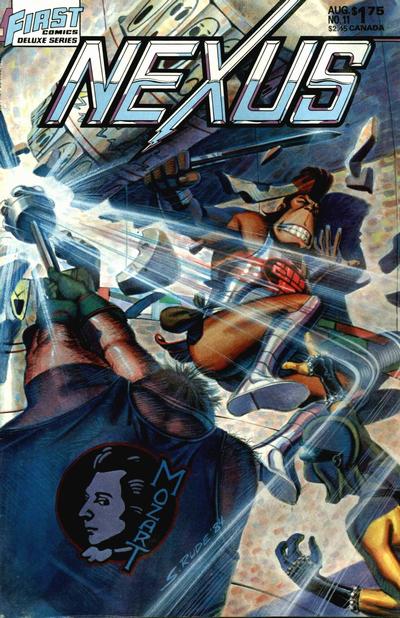
That same team is back in the fifteenth issue which shows the duo stopping a deadly fleet from destroying worlds. Peter is alerted to this threat by a dream, and given his powers combined with that he seems a real precursor to Nexus who was likewise motivated by dreams. The similarity between these heroes really stood out to me as I read these stories for the first time in years. By the way that's a Joe Jusko cover above. Star-Lord didn't appear often but when he did, he got the best of the best. 


Star-Lord appears in color for the first time in a story written by Claremont but drawn and apparently painted to some degree by Gene Colan. This is a lush package underneath a powerful Earl Norem cover. Peter Quill finds romance of a sort with a creature who only appears to be an Earth woman to suit him. 


Doug Moench becomes the regular writer of Star-Lord in the eighteenth issue of Marvel Preview and is joined by artist s Bill Sienkiewicz and Bob McLeod. Quill is matched up against a race of "Lion Men" (shades of Flash Gordon). Somewhere along the way Star-Lord lost his helmet and it was a mistake in my opinion. The look of his costume is hurt with its absence. But clearly the creators wanted to show his face more, the same reason mask don't last long in most feature films not starring Batman. 


Star-Lord jumps to color comics in the sixth issue of the second Marvel Spotlight series. His origin is revisited, and we learn much more about the Master of the Sun and his connection to a young Peter Quill. Tom Sutton becomes the new regular artist, joining Moench. I really like Sutton's take on the character. 


The pair are back in the next issue in a story in which the life cycle of a species is central to the outcome of the plot. While Peter Quill is a powerful man, he is a man who is often confused by the creatures he meets. Moench is really quite good at presenting alien intelligences. 


The stories jump to Marvel Premiere and we get a story told from the point of view of a planet. That gives the story a larger and more profound perspective. Moench with Sutton's input is really interested in doing interesting things with the character, but alas this issue will be the last Star-Lord story for many years. 


This volume closes out by jumping to the 90's when a three-part mini-series starring the character is launched written by science fiction talent Timoth Zahn and drawn (painted really) by Dan Lawlis. We learn more about then nature Star-Lord's powers and the great cost it requires to use them. Actually this adventure doesn't feature Peter Quill who has been missing for some time as the story picks up but instead installs Sinjin Quarrel, a young telepath in the role. He picks up the mantle when he unearths Ship. The duo are then thrust into an adventure which has them confront some of the worst outlaws in space. I don't know how this fits into the larger Star-Lord saga but I'm not required to know. It was a nice addition. 


And that wraps up the classic adventures of Star-Lord, one of Marvel's more interesting Bronze Age characters. You have to give them credit for really staying with the concept and trying to find a way to launch it. But that old canard about science fiction not selling in comics seems to have proven true, at least back then. 

Rip Off

Saturday, March 4, 2023

Nexus Omnibus Volume One!


I've tried to live a life with few regrets, but when it comes to reading comics, one regret I have for certain is that I did not keep up with Steve Rude's and Mike Baron's Nexus series as it rambled across the comics medium. This rather adult and sometimes sardonic re-imagining of the classic Space Ghost character for a harder, meaner universe has a lot to offer.

I was all in for Nexus from almost the beginning, starting with the second magazine-sized black and white issue from Capitol Comics. I pretty quickly nabbed the debut sporting its decidedly awesome Paul Gulacy cover image, and it was off.


The origin of Nexus is one of the best in comics. He's a driven, nearly mad protagonist who slays mass murderers, himself being the son of one such villain. He grew up isolated and alone save for some possibly imaginary alien friends on a the moon Ylum and became empowered in ways both frightening and even to him mysterious. Great, great premise -- a sleek spaceship arrives unexpectedly and a handsome and enigmatic figure emerges to confront some killer with his crimes and deliver judgment and punishment simultaneously. Powerful stuff!

The book became a color offering in regular size for a time from the small Capitol brand before they went bust.


That's when I abandoned ship. Not because as Judah Macabee screams above, that I was bored, but because financially I had to choose to support a growing family and not read nearly every independent comic book on the market.  Because as we all know with great responsibility comes great need for ready cash flow.

When Nexus migrated to First Comics, I didn't follow. So, when I sat down with the Nexus Omnibus Volume One, these stories were all brand new to me. Imagine buying up comics and storing them inside a cave for decades before you can read and enjoy them. That's what finding this omnibus reprint is like in many ways, these are comics I've never read, but always wanted to and now I can for small money and with relative ease. Fantastic!


The First Comics run begins with a salty crossover as Mike Baron's Badger gets a guest-shot in a trilogy of Nexus issues which finds him and Judah crossing over into a bewildering world located within a black hole. It's clever and witty stuff from the gang, and a swift entertaining read.


The collection ends with a trio of stories which begin to address the mystery of the origins of Nexus and of Ylum itself. For all the froth and bother in the front of these narratives, there is always a deep dark core which gives Nexus a gravity missing from many other comics. This is at once light entertaining fare and profoundly disturbing material, all inside the same package -- a wonderful balancing act by Baron and Rude.

The second omnibus awaits. 

Rip Off

Friday, March 3, 2023

Buck Rogers On The Big (And Little) Screen!


Buck Rogers the classic movie serial from Universal starring Larry "Buster"Crabbe was made during his classic run of Flash Gordon movies for the same studio and it fits right in among them. The pacing, the sense of derring-do all match perfectly the tone of the Flash Gordon movies. A few times you even expect to hear "Flash" come from someone's mouth. 


But in a number of ways this movie is maybe superior to the Flash Gordon serials. While it doesn't have the sheer sense of awe of the first Gordon serial, it matches up very well against the later two. The pacing in this story is very well handled, with very few slow patches. The chapter lengths are about right for the stories told and you don't have long sections of endless corridor running which beef up weaker serials. The villains are less exotic but seem more competent making them more of a basic threat. 


The real strength of this story though is the wide array of technical details it offers up. This movie features the sci-fi concepts of suspended animation and time travel, instant molecular transport, anti-gravity belts, interplanetary spacecraft, mind-control machinery, bullet mini-trains, alongside the obligatory rayguns and ray cannons. There's even some invisibility. Things never get dull and the different things make for a varied and somewhat unpredictable adventure (at least by serial standards). Heck, Wilma Dearing even saves herself a time or two, not needing Buck to ride to the rescue. A woman saving herself was downright unique in the format, not to mention the boy sidekick Buddy who isn't really just an excuse but helps out Buck quite a bit himself. Rare indeed. All in a dandy serial. 

The year is 1979…”: 40 years of “Buck Rogers in the 25th Century” – Musings  of a Middle-Aged Geek

Buck Rogers is a curiosity in that the concept at once inspired Star Wars and was inspired by it when in 1979 Glen Larson's outfit, the fame folks who gave us Battlestar: Galactica revived the vintage comic strip hero and dressed all in white and let him dash around for the amusement of those of us hungry for every mote of science fiction we could vector in on. 

Which sci-fi TV show did you think was better between Buck Rogers In The  25th Century and Battlestar Galactica? And why? - Quora

The update as seen in the "theatrical release" is reasonably true to the classic, a time-lost hero is awakened five hundred years in his future to an Earth struggling after devastating conflicts. The open racism of the classic Nowlan-Calkins strip is disappeared largely but in its place are heaping gobs of anti-feminist dross. The old comic was sexist as heck too, but by 1979 most of that was still okay. The "movie" starts with a title sequence that would've made James Bond proud, a gaggle of slinking beauties bathing in the reflected light of the logo. Among that assembly was the lovely Erin Gray who has become arguably the sci-fi sex icon of the era. 

Pamela Hensley as Princess Ardala in the television series "Buck Rogers in  the 25th Century" which was first broadcast … | Buck rogers, Pamela  hensley, Buck rodgers

Most of the show is pretty decent rot for the time, save for Gil Gerard's take on what passes for perseverance and mostly resembles contrarianism. There's a whole dance sequence I just ignore, so painful is it to watch that I find it a grand opportunity to get something to drink or eat. Pamela Hensley is seriously hot, but her role is cliched beyond her control. Henry Silva connects the dots on his villainy, and not do much more ain't his fault as far as I can see. 

Our Favorite Helper Robots from TV Shows and Video Games | Buck rogers, Sci  fi tv shows, Buck

The two things I most remember about the show are Twiki along with his medallion buddy Doctor Theopolous, and the trailer. I did see Buck Rogers in the theater, as it was a time when I saw most every show even sort of science fiction like. But I don't remember seeing it so much as seeing the trailer which was incredibly long and told the story fairly completely, less an incentive to see the movie and more a summary. I've always applied the rule that the longer the trailer the worse the movie and that usually holds up.

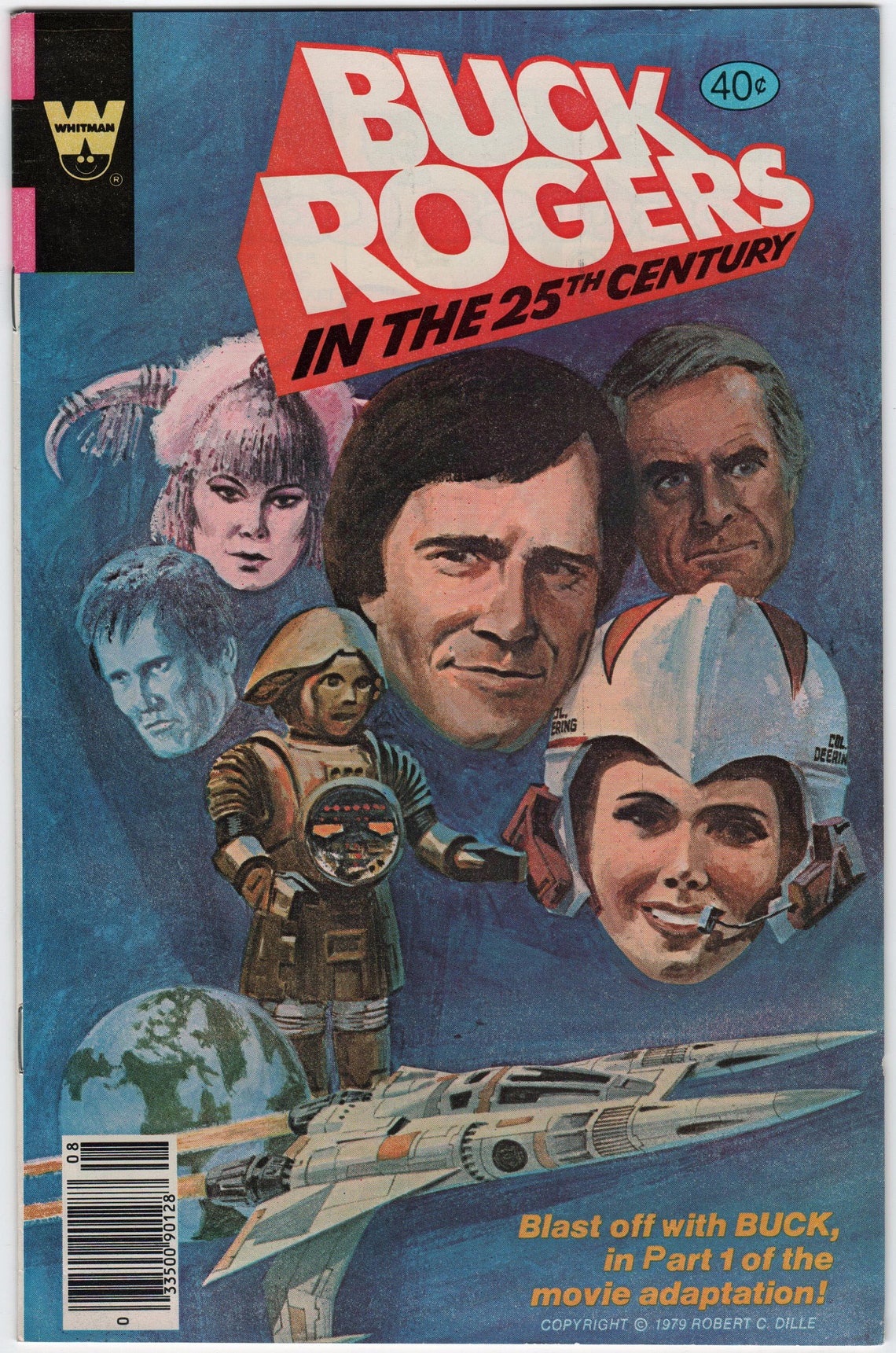
Buck Rogers 39 year old Whitman Comic   No. 2 In the 25th image 0

Buck Rogers became a television show and it was fine, something passably decent to watch with competent acting and production. But it rarely if ever rose above its upbringing, and that's a pity too. 

NOTE: This is a Dojo Revised Classic Post. 

Rip Off

Thursday, March 2, 2023

Buck Rogers In The 25th Century!


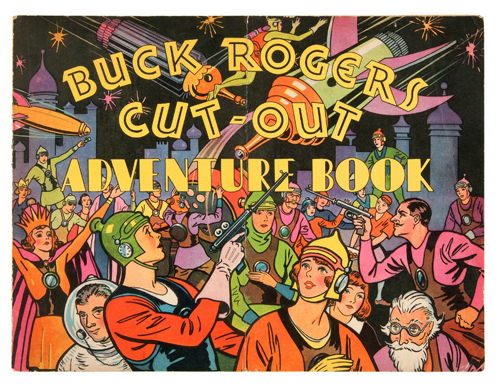
Here's a simply delightful Buck Rogers cover, a whimsical and frankly beautiful image of a space filled with colorful planets and even more colorful spaceships flitting through the deep dark. This book seen in some more detail here was an early 1930's Kellogg's cereal premium and apparently is quite the Buck Rogers collectable today. It's charming!


In almost every way measurable by the aesthetics of the art of comics, Buck Rogers, though the first of the hugely successful comic strips, was inferior to the later Flash Gordon. But don't try and tell that to Buck's many fans. 

Badges and Decoder Rings for the Buck Rogers Clubs (the Solar Scouts) from  the 1930s | motto.media

In a nifty book I own called Blast Off! dedicated to the myriad collectibles from decades of sci-fi and outer space comics and TV shows and elsewhere there are thirteen whole pages dedicated the sundry collectibles of Flash Gordon such as ray guns, Big Little Books, and such. But for Buck Rogers the book spends no less than thirty-seven pages documenting just some of the badges, toys, games and such inspired by the characters. 

Vintage Buck Rogers items up for bid at Hake's

After reading the first few years of the daily strip in the collection The Collected Works of Buck Rogers in the 25th Century, a book I've had in my collection for decades, I am a little tired to be honest. The concepts by the creators come at the reader fast and furiously, something that likely quickened the imaginations of folks coming to these notions for the first time. In two panels of the first daily Buck Rogers is transported to the world of the future and quickly made a soldier of the "Orgs". These are organizations which have replaced states in what was once the continental United States and these "Orgs" are in different states of technological development with some being rather primitive indeed. Buck has wakened to a world dominated by the Mongols. 

A Louis Marx clockwork Buck Rogers 25th Century Rocket Ship | Christie's

And that brings up the nastiest aspect of the Buck Rogers story, the rampant racism in the inherent concept. While Flash Gordon dabbles in "Yellow Peril" tropes with the faraway Ming the Merciless, Buck Rogers jumps into the outlandish racist attitude with both anti-gravity levitated feet. It's a race war across the continent and the "white" forces are definitely on the defensive and feeling their long and in their minds deserved hegemony over other races slipping away. (Not at all like the real modern world. Yikes!) A line like that's "white of you" is actually used at one point in the series. Now I don't want to beat this to death, and truth told I felt that after the initial story the story went in some less offensive directions, but there's no getting away from that fundamental fix at first. 


Artistically the best I can say for the earliest Buck Rogers strips is that they are cramped, hampered by too much text squeezed into too small panels. There is a static quality to the story telling which gets a little dull after a time, a lack of imagination as to angles and there are no close-ups that I recollect. Knowing what anyone looks like really is a guess at best. 


Like much of the early science fiction these strips are less about the people than the technology they use and that explains I guess the fascination with machines and the toys too. 


There is, to the strip's credit a strong move to interact with the readership and based on what I've seen of later years of the series the art gets much better and even in color compelling. 


NOTE: This is a Dojo Revised Classic Post. 

Rip Off

Wednesday, March 1, 2023

Tales Of Time And Space!


This month sort of picks up where last month left off. We continue to explore the vastness of space but add the even more capacious realm of time. The Whitman anthology above was one I had a kid way back in 1969 when science and such was generally supported by the masses. These days folks seem to not care for the opinions of experts, preferring to substitute their own gut instincts. But there's hope and to that end I want to spend my time immersed in science, or at least science fantasy. 


The centerpiece of reading this month will be Nexus. I've raved about Nexus more than a few times here and after collecting up seven of the eight omnibus volumes (I consider the eighth a lost cause at this point and I have most of those in the original) I want to read through this truly epic story of a young man who only wants to make the universe better by killing mass murderers, and so he can get a good night's sleep. I'm being snide, but this really a thoughtful series by creators Mike Baron and Steve Rude, along with the many artists who assist along the long road. 


Star-Lord is now world famous as a member of the Guardians of the Galaxy (Marvel cinematic universe variety). But before that Peter Quill was a hero much in the mold of Nexus and preceded him to boot. Marvel managed to kick out one Star-Lord yarn a year beginning in 1977 and some great talents had their way with him.


And speaking of Guardians of the Galaxy, I want to take another ramble through their earliest adventures. I'm of course not talking about the guys so famous today but the originals who made their first mark in the pages of the eighteenth issue of Marvel Super-Heroes. Created by Arnold Drake and drawn by Gene Colan, these heroes from the future left an impression on this young fan which has never dimmed. 


If time allows, I want to take a dive into the science fiction stories drawn by Wally Wood.  Wally Wood was the absolute master of his form. On some of his stories Wood was assisted by partner Harry Harrison.


Harry Harrison was a colleague of Wally Wood, but we know him these days mostly for his science fiction stories, the most famous of which is Make Room! Make Room! This is a novel about overpopulation on this planet and inspired the movie Soylent Green. Expect reviews. 


Beyond Thirty is a short novel by Edgar Rice Burroughs, one of his earliest which explores what the world might be like a few centuries if the Americas had not gotten involved in European wars, but instead cut off that part of the world. The changes are profound. 


Another grim future is presented in Logan's Run. This story of a controlled society in which no one lives beyond thirty so as to manage the population is a true classic. The movie was a stunner in its day and inspired a television show. I want to sample all three. 


But what about time. Well, I've long wanted to amble through the Irwin Allen project called The Time Tunnel. This wacky show lasted only one season, but it made some bizarre shows in that short time. If you've not seen it, it's about two scientists who are lost in time and wash up in time period after time period each week just in time for shenanigans of all sorts. 


Before The Time Tunnel. the was the "Wayback Machine", owned and operated by the canine genius Mr. Peabody. Peabody and his boy Sherman visit many of the greatest names in history and help them along in their work. This is truly a timeless time-travel feature. 


And last but not least Showcase Corner will feature Rip Hunter Time Master. While Adam Strange saved Rann from countless menaces, Rip and his team were hurtling through time seeking adventure in age after age. 


There might even be a few surprises as well. All in all, it's a heavy lift as usual, but one I'm very much looking forward to. 

Rip Off